Absolute Black Granite.
A true jet-black granite quarried from the Hassan and Bangalore districts of Karnataka, Absolute Black is valued worldwide for its flawless, grain-free appearance and exceptional hardness.

About Black
Absolute Black Granite is sourced from quarries concentrated in the Hassan district of Karnataka, within the Dharwar Craton – one of the oldest stable geological formations on the Indian subcontinent. The stone is a fine-grained dolerite intruded into Precambrian basement rock, its uniform character a result of rapid cooling at shallow crustal depth. It has been exported continuously since the 1980s and remains one of India's most consistent black stone offerings. FOB Mundra / Nhava Sheva. Origin and specifications verified by Gemarix.
Geological Profile
Absolute Black is petrologically a fine-grained dolerite composed predominantly of labradorite-bytownite plagioclase feldspar and augite pyroxene, with accessory magnetite, ilmenite, and trace apatite. The absence of visible quartz or feldspar megacrysts creates the stone's signature monolithic appearance. Near-zero porosity results from the tightly interlocked crystalline matrix, making the stone impermeable to liquids without treatment. Its high compressive strength and surface hardness make it suitable for the most demanding structural and decorative applications.
Color & Character
Absolute Black Granite presents a completely uniform jet-black field with no visible grain, veining, or mineral variation under normal viewing conditions. The matrix appears as a single continuous dark mass on honed or brushed surfaces, while polishing brings out a faint deep-blue undertone visible in raking light. There are no flecks, clusters, or movement patterns — the stone is defined precisely by what it lacks. This total uniformity makes it the reference standard for black stone specifications in monument, memorial, and premium architectural projects.
Best Applications
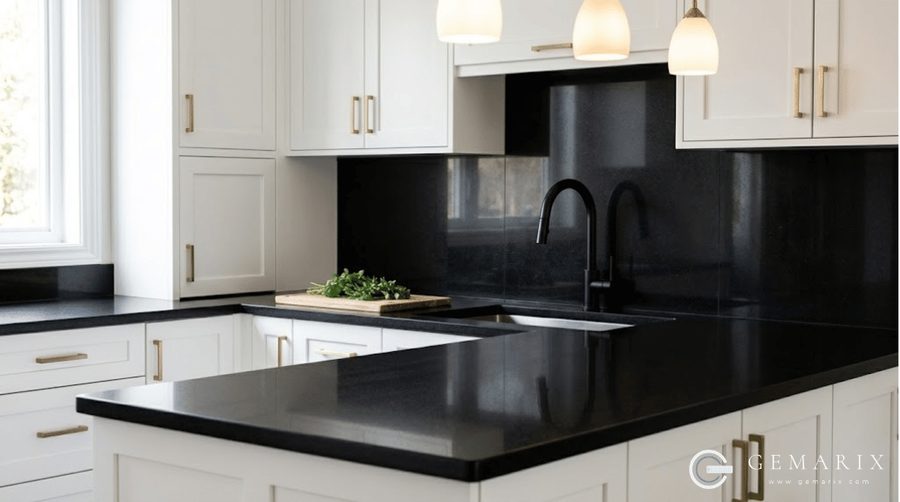
Kitchen Countertops
The near-zero porosity and extreme surface hardness of Absolute Black make it highly resistant to staining, etching, and heat — practical for daily kitchen use while delivering a striking monochromatic aesthetic.
Memorials & Monuments
Absolute Black is one of India's primary memorial stones. Its consistent colour, durable polish, and fine grain make it the benchmark specification for headstones, mausoleums, and commemorative structures worldwide.
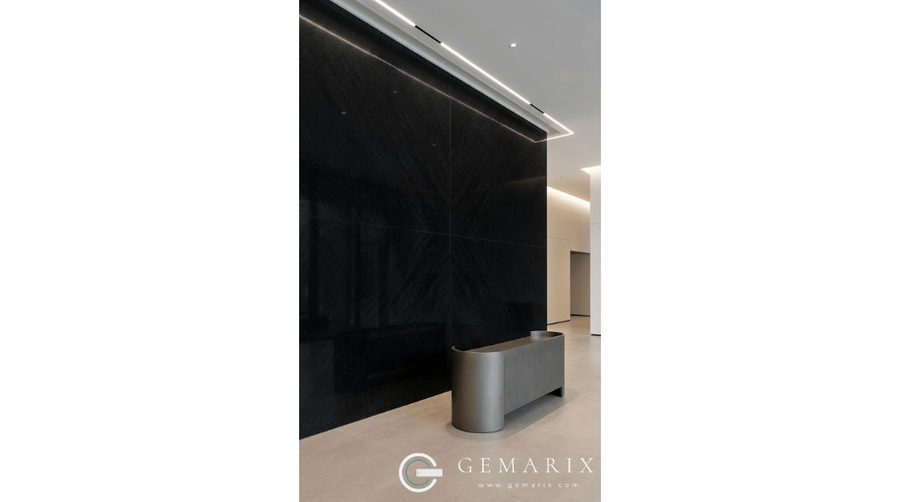
Wall Cladding
Polished Absolute Black panels create high-contrast feature walls in hotel lobbies, lift interiors, and reception areas — the stone's uniformity ensuring visual continuity across large cladding runs.
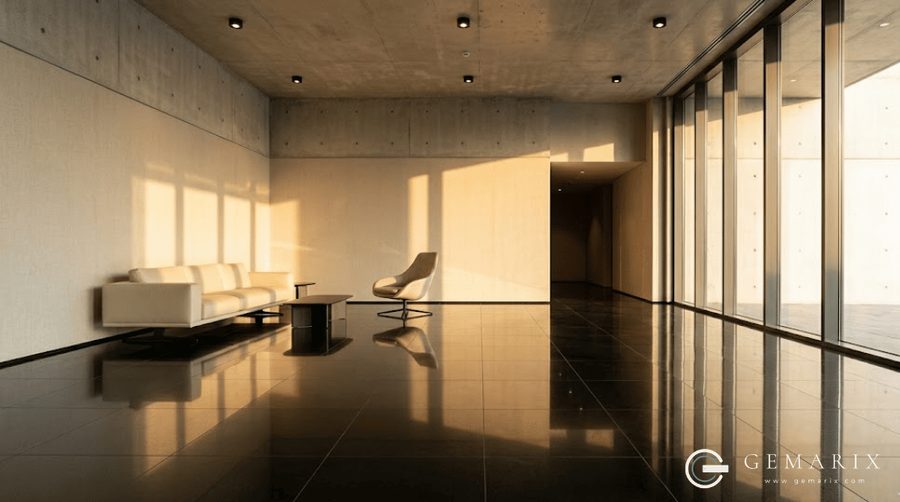
Flooring
Honed or brushed Absolute Black provides excellent slip resistance and depth of colour for high-traffic commercial floors, corridors, and public space paving.
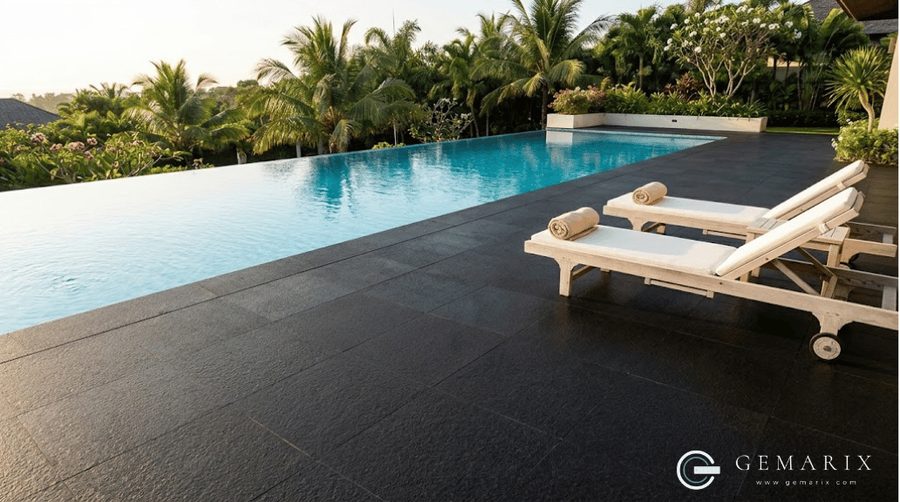
Exterior Facades
High compressive strength and frost resistance make Absolute Black suitable for building cladding, entrance steps, plinth facings, and column wraps in all climatic zones.
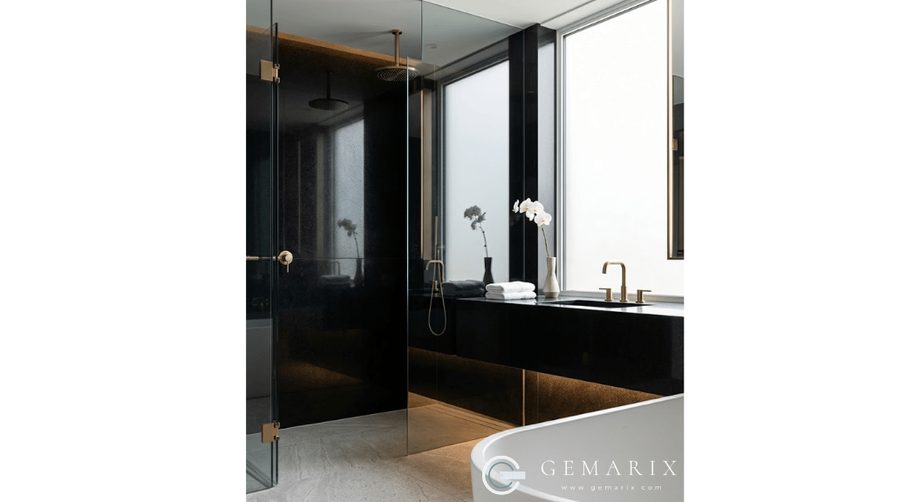
Bathroom Vanities
Polished or honed vanity tops, shower enclosures, and basin surrounds benefit from the stone's impermeability and its ability to create seamless, high-contrast bathroom environments.
Available Finishes
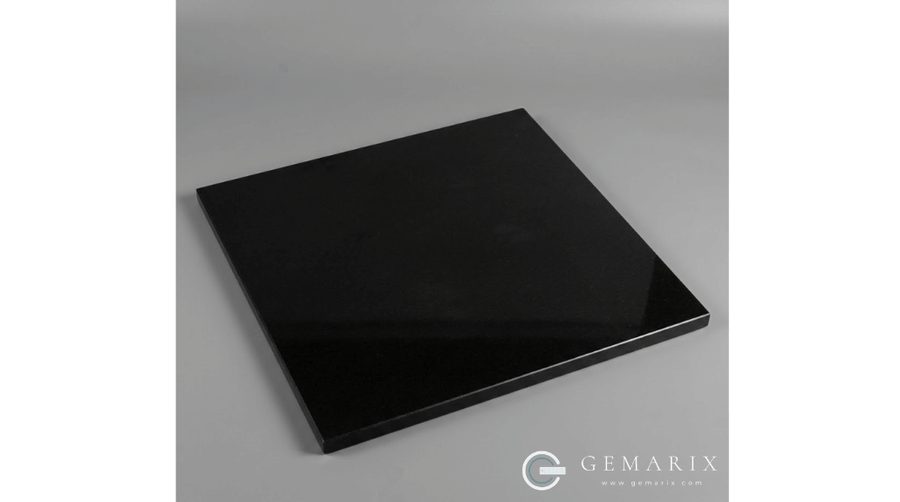
Polished
Mirror-bright finish that enhances colour depth and mineral detail.
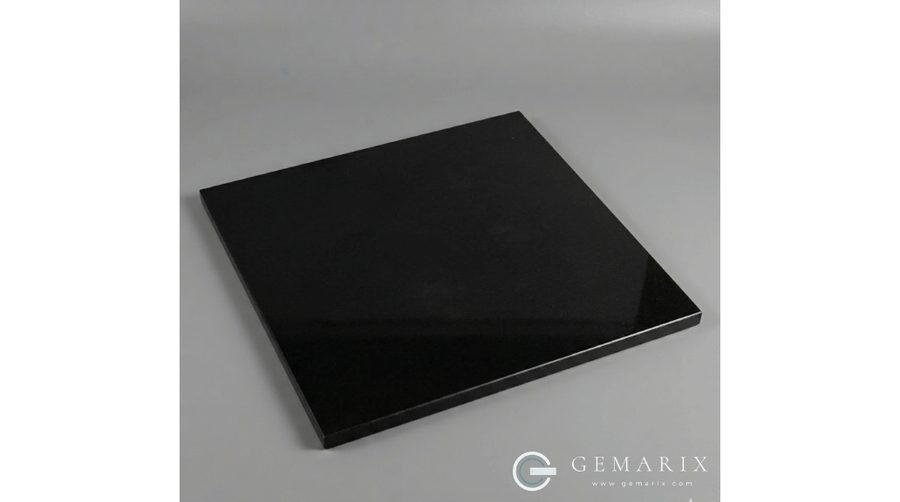
Honed
Matte, contemporary surface with good slip resistance for flooring and wet areas.
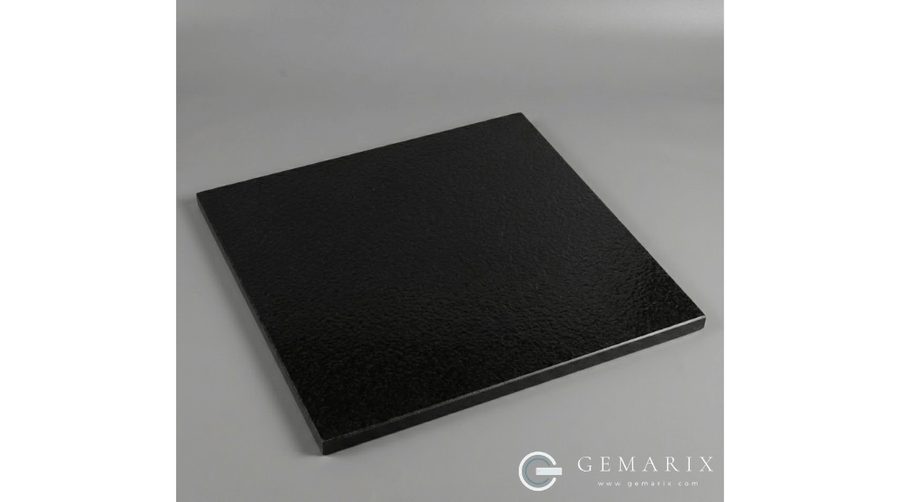
Leathered
Subtle micro-texture with sophisticated hand feel, ideal for kitchen surfaces and feature walls.
Brushed
Tactile finish with a refined natural feel, suited to exterior and heritage applications.
Available Sizes
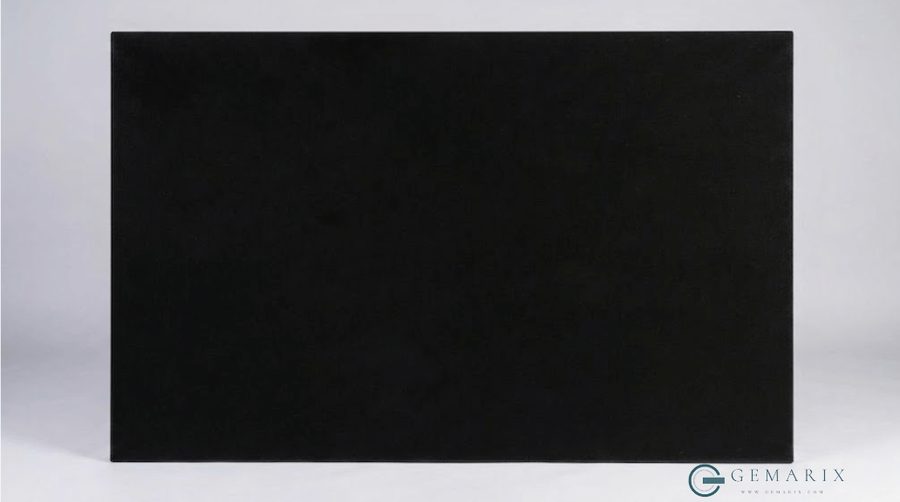
Gangsaw Slabs
up to 280 × 180 cm
Thickness: 18, 20, or 30 mm. Ideal for large-format countertops and continuous wall cladding.
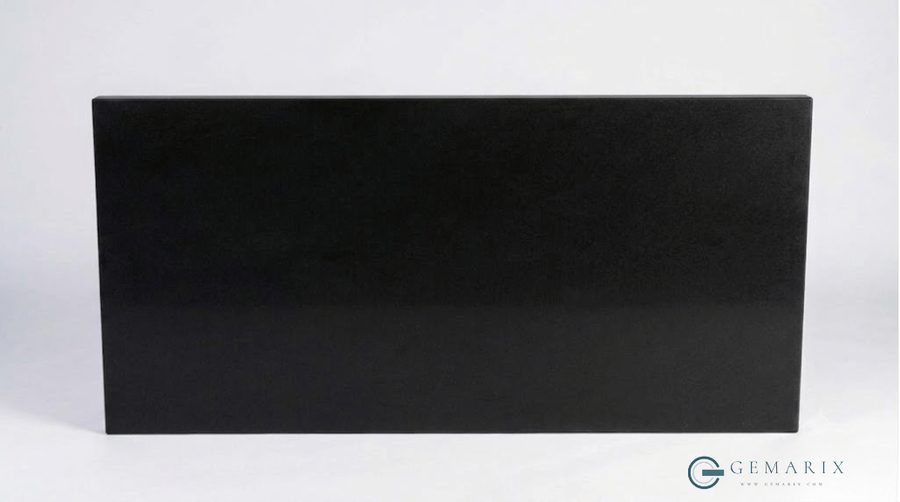
Cutter Slabs
up to 240 × 75 cm
Thickness: 16, 18, or 20 mm. Standard for kitchen vanity tops and commercial worktops.
Tiles
30×30, 30×60, 60×60 cm
Calibrated tiles for flooring and wall applications.
Custom Cuts
Cut-to-size
Bespoke dimensions available for export orders on request.
Care & Maintenance
Absolute Black Granite is virtually maintenance-free in most applications. Its near-zero porosity makes it highly resistant to staining without sealing; for kitchen countertop use, an impregnating sealer applied at installation and refreshed every two years provides additional assurance. Clean with a pH-neutral stone cleaner and avoid bleach or acid-based products on polished surfaces. The high-gloss polish is long-lasting and does not require re-polishing under normal conditions.
Request a Quote
Price on request. FOB Mundra / Nhava Sheva. MOQ and pricing vary by specification and destination. Contact us for availability, samples, and lead times.