 North Indian Granite
View Details →
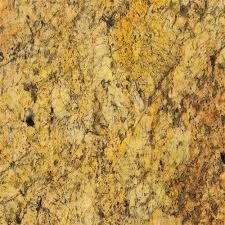
Alaska Gold Granite
Warm golden-beige. North India.
View Details →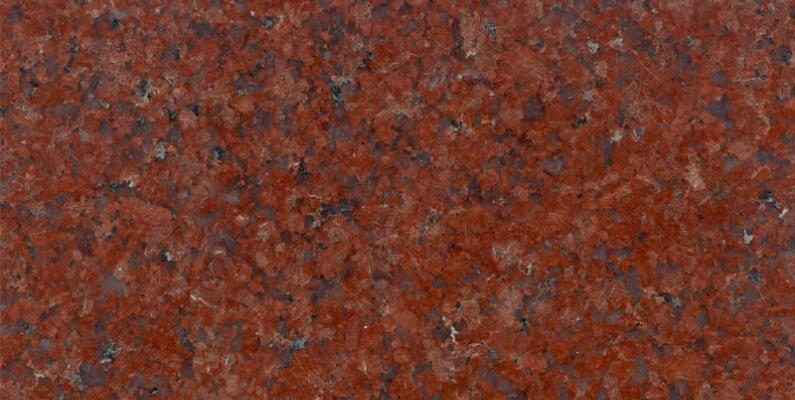
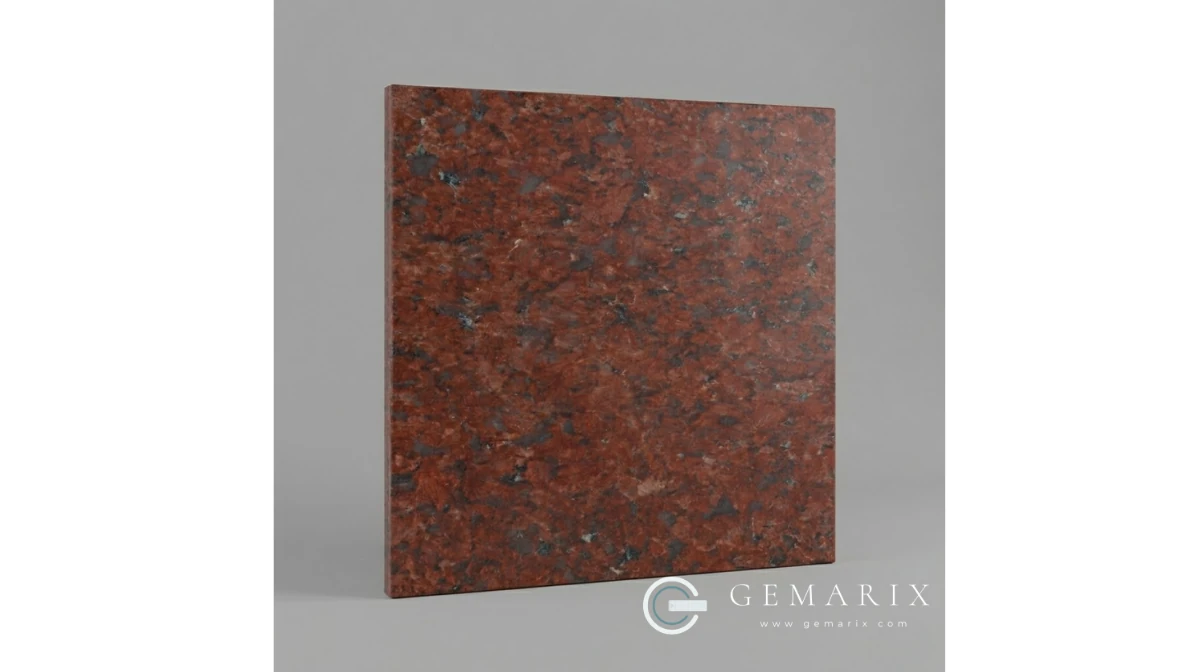
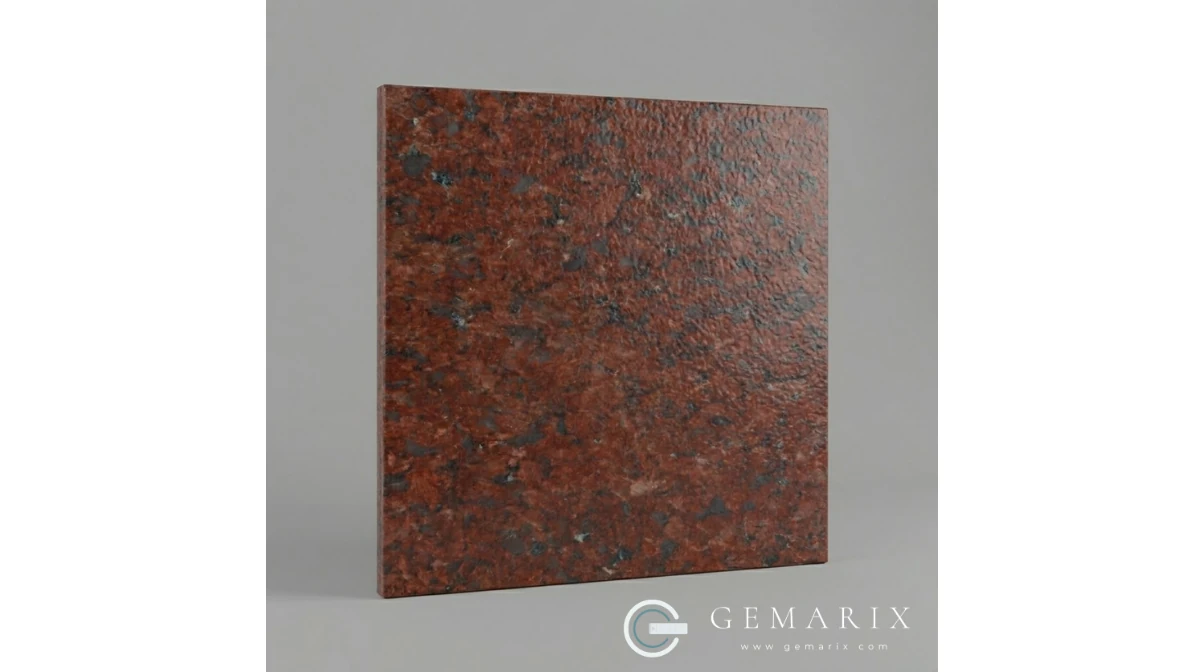
FOB Mundra / Nhava Sheva. MOQ and pricing vary by specification.
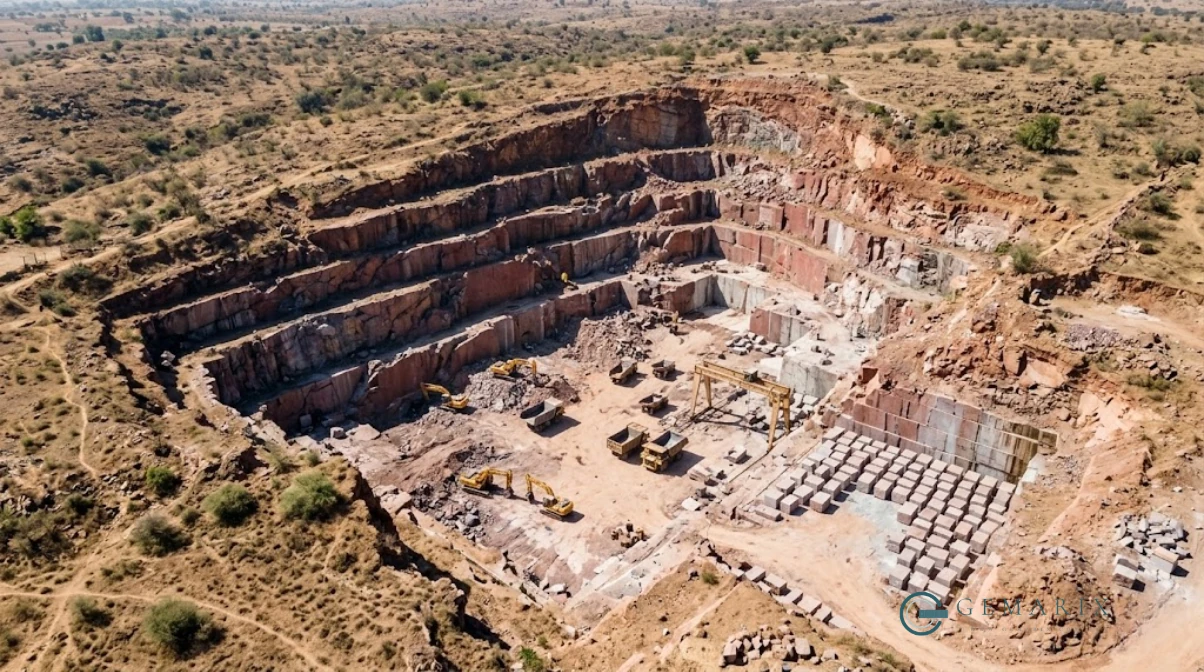
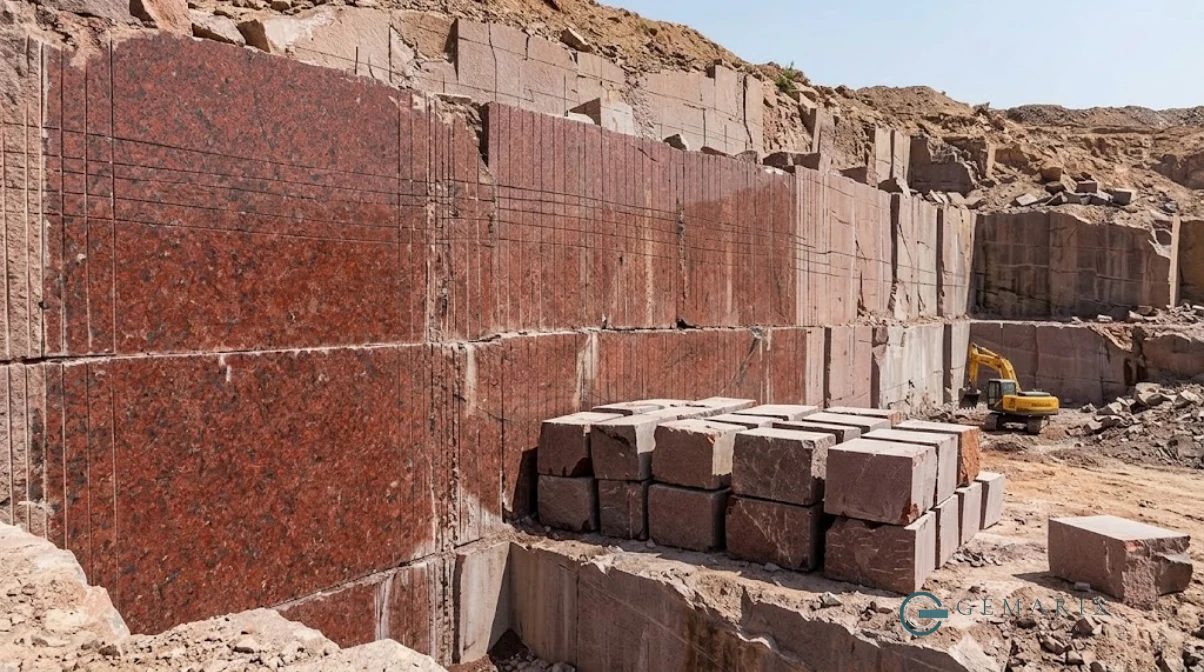
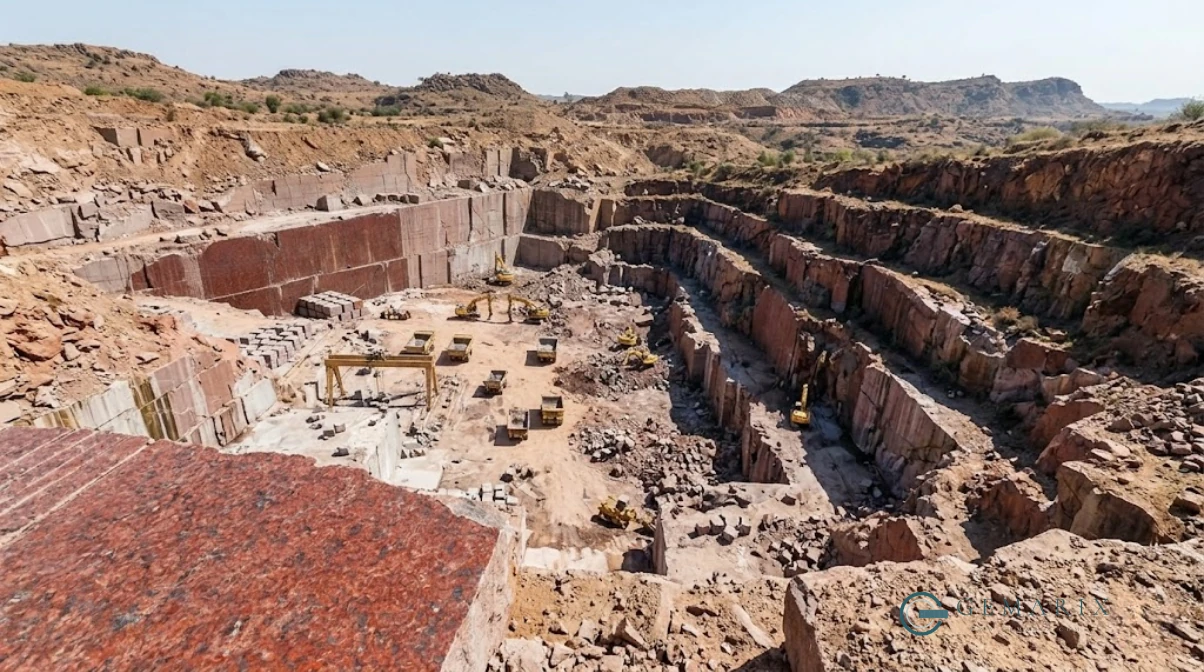
Jhansi Red Granite is quarried from igneous formations in the Bundelkhand region, at the meeting point of Uttar Pradesh and Madhya Pradesh in central India. The Bundelkhand Craton is one of the oldest geological terrains on the subcontinent — a Precambrian massif of interlocked granitic and gneissic rocks that has supplied building stone for forts, temples, and civic structures across central India for millennia. Our quarries in the Jhansi area access deeply weathered overburden to reach the consistent, hard-crystalline stone below, supplying gangsaw slabs 280 × 180 cm direct to export.
Jhansi Red has been specified for government buildings, memorials, and civic paving across India and the Middle East, valued for its combination of striking colour, high compressive strength, and dimensional stability across wide temperature ranges. Every consignment is graded and inspected before shipment to ensure colour consistency within the accepted natural variation range.
Indicative quarry views — actual sourcing site varies by consignment
Jhansi Red is a coarse-grained igneous granite formed through the slow cooling of magma at depth within the Bundelkhand Craton. Its mineral composition — predominantly potassium feldspar, quartz, plagioclase feldspar, and biotite mica — accounts for both its signature deep red colour and its exceptional hardness. The dominant K-feldspar crystals are large enough to resolve with the naked eye and carry the iron-oxide pigmentation that gives slabs their characteristic crimson-to-terracotta tone.
Technical properties: density approximately 2.63 g/cm³, compressive strength exceeding 150 MPa, water absorption below 0.4%, and a Mohs hardness of 6–7. These values make it one of the more durable materials in the Indian granite range — frost-resistant, scratch-resistant, and stable under thermal cycling. It performs consistently in exterior applications from the Persian Gulf to northern Europe. Origin and specifications verified by Gemarix.
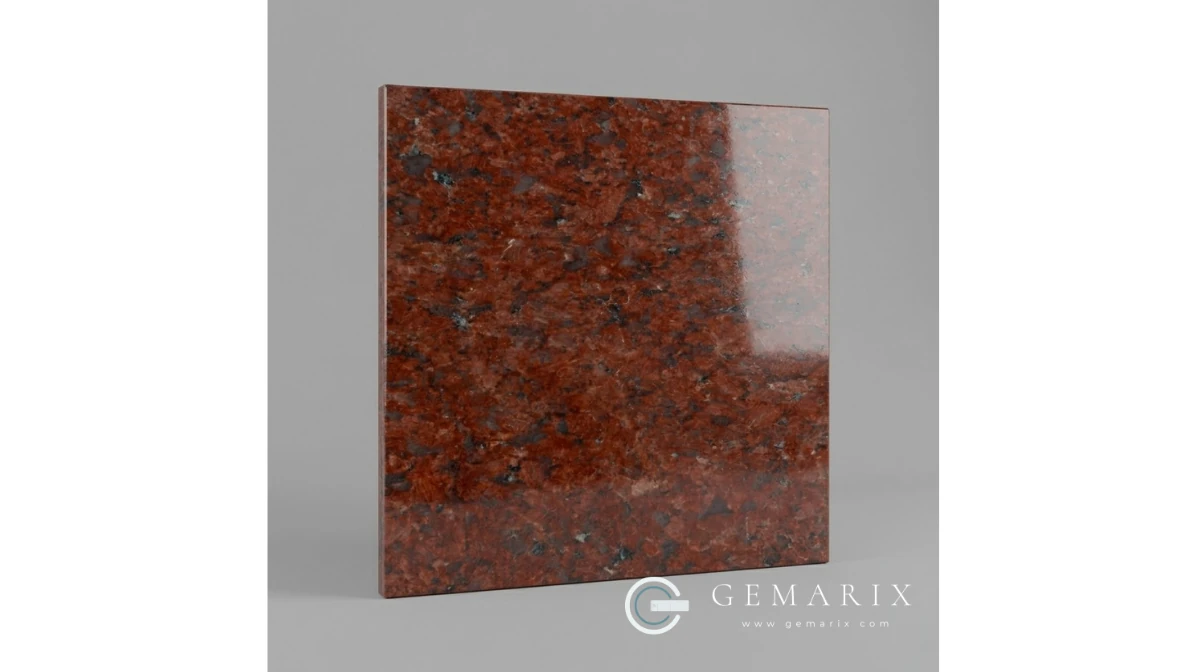
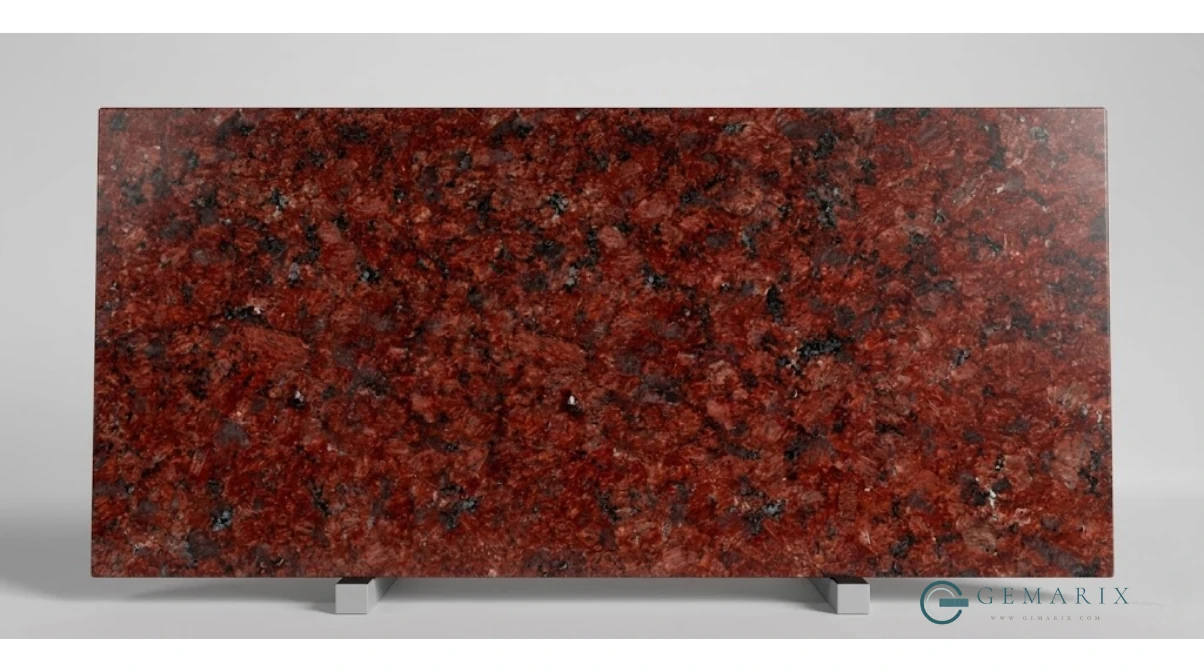
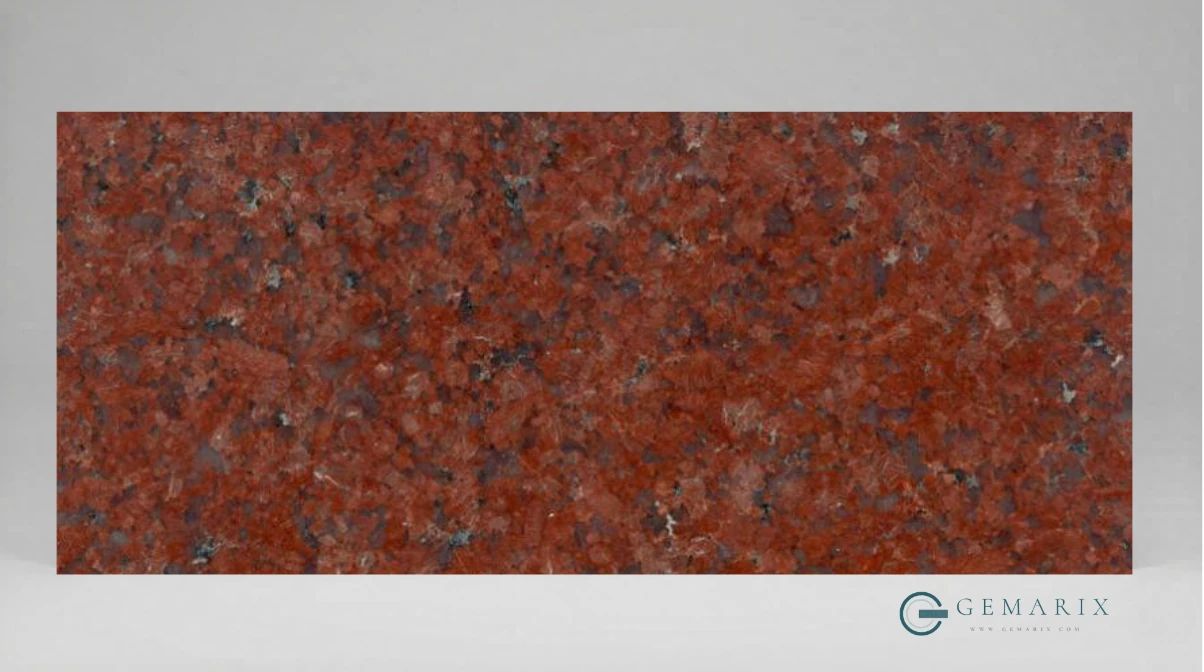
The dominant tone is a deep crimson-red to warm terracotta, produced by the high K-feldspar content and its iron-oxide staining. Across the slab surface, scattered cream and white quartz inclusions provide tonal relief, and fine dark biotite mica specks introduce a subtle shimmer that animates the stone under directional light. The coarse crystal structure reads as robust and assertive — this is not a neutral background stone but one that commands a space.
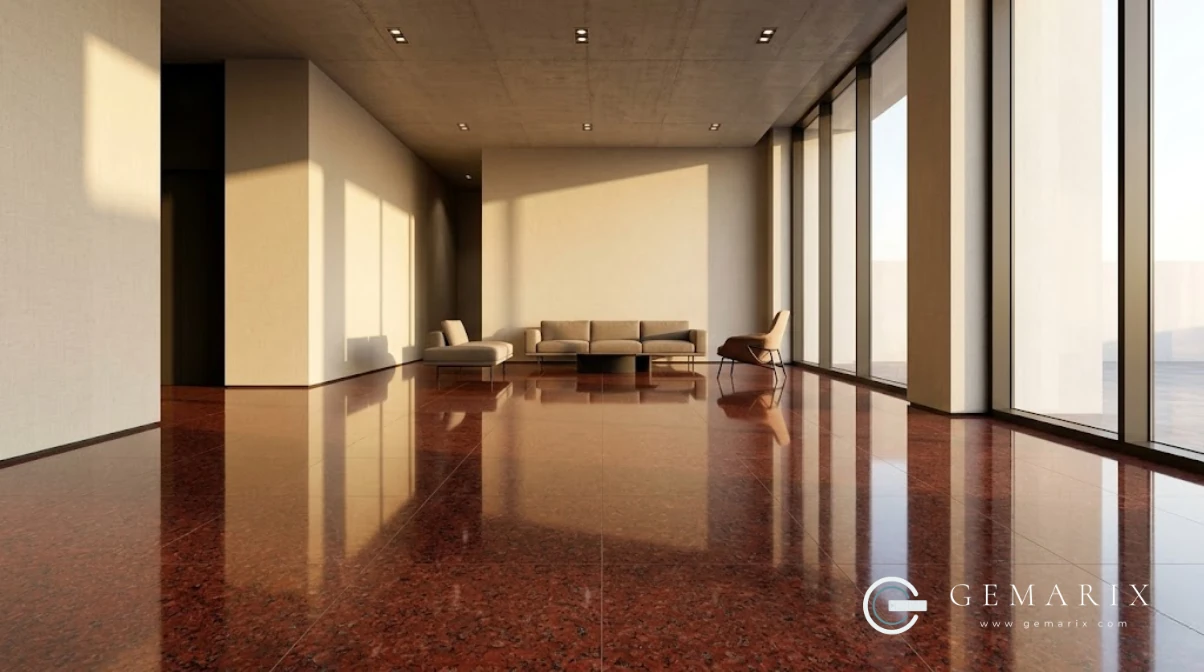
Colour variation between blocks is moderate: most production runs deliver consistent deep-red fields with minor shifts in saturation and the distribution of quartz inclusions. Polished finishes intensify the red and bring out the metallic mica sparkle; honed finishes pull the colour toward a warmer, more earthy terracotta with a flat matte quality. The stone pairs strongly with dark joinery, black metalwork, pale plaster, and natural timber — it anchors a space without softening.
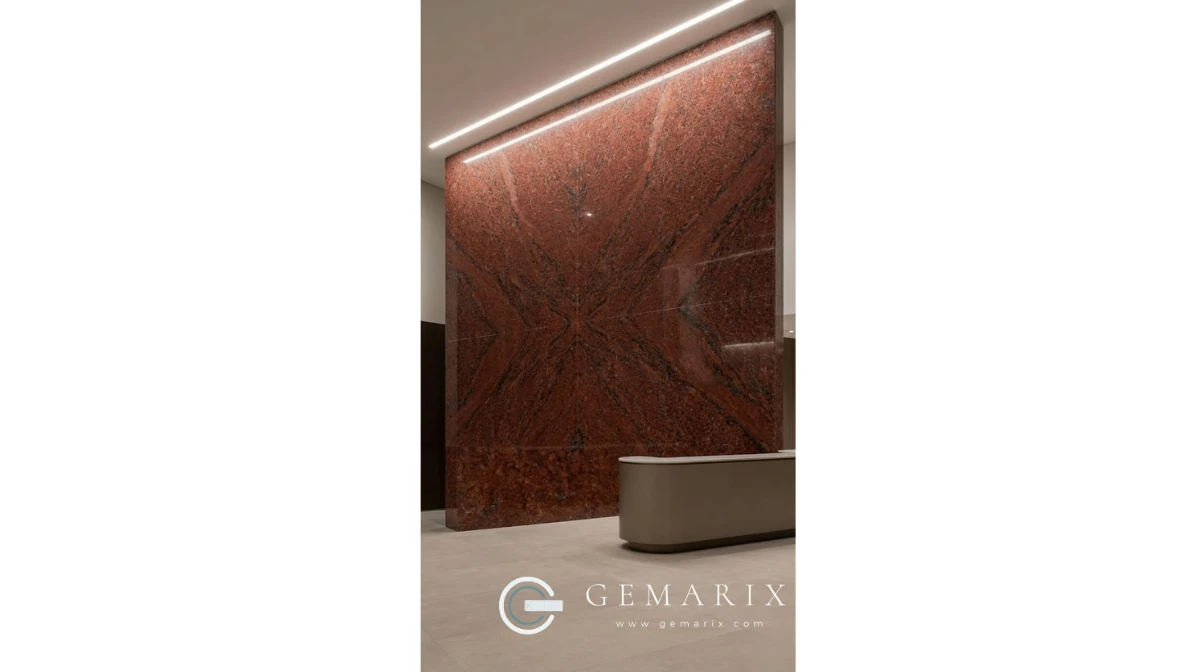
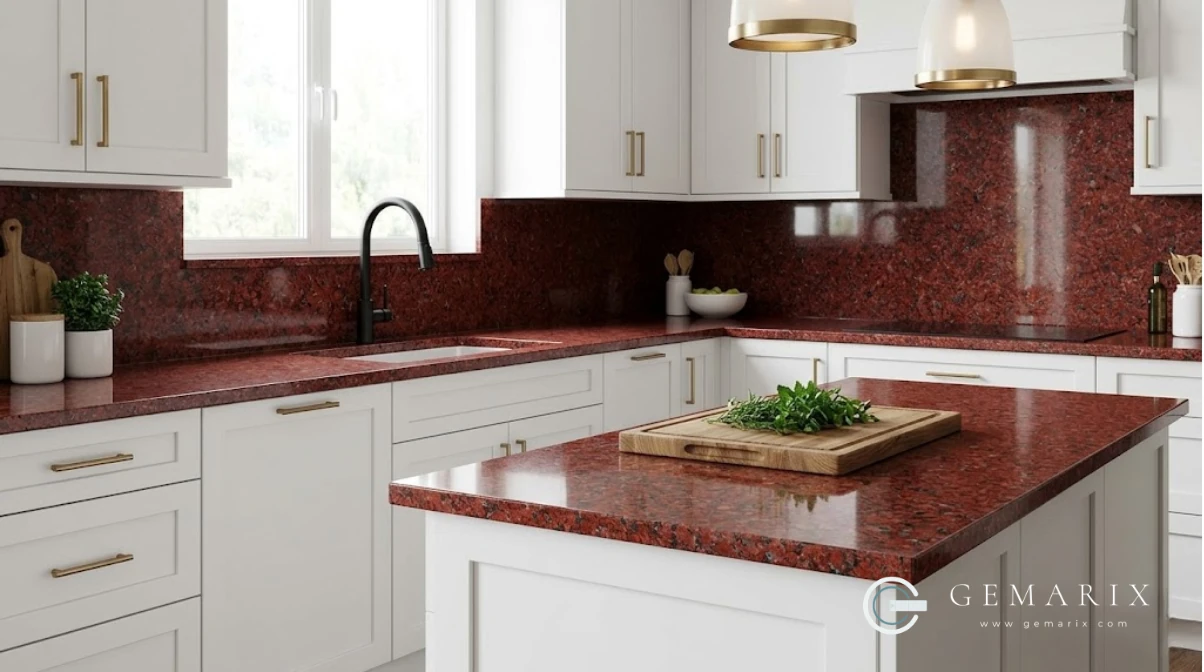
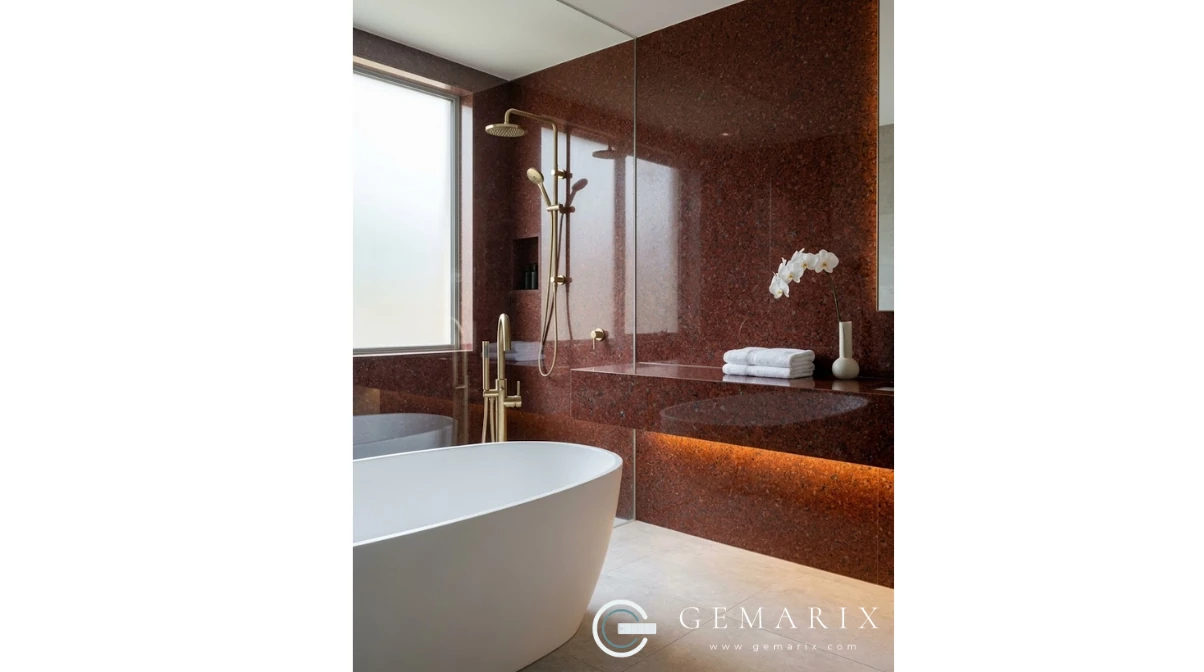
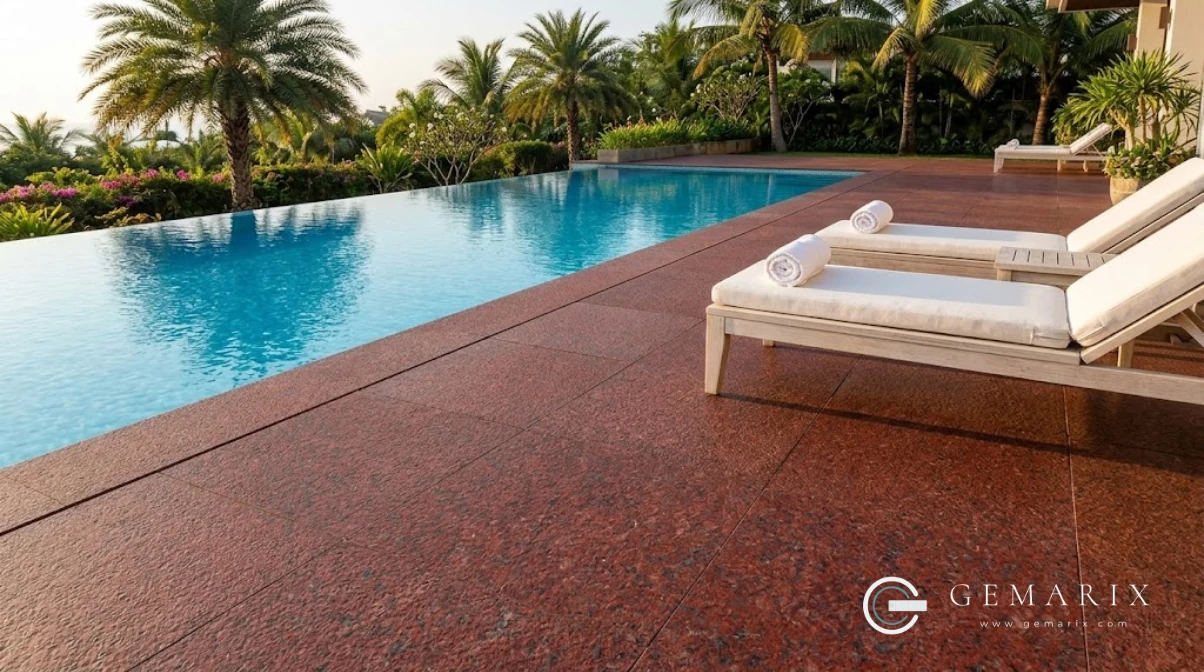
Jhansi Red's hardness and weather resistance make it equally suited to exterior paving, facades, monumental work, and heavy-traffic interior flooring. It is frequently specified for entrance plazas, civic squares, memorial platforms, and building plinths where a strong visual identity is required alongside long-term durability. Its frost resistance opens the full range of European and northern-climate markets. Interior uses include feature flooring, reception counters, stair treads, and kitchen island worktops where the bold red colour is the design centrepiece.
Gangsaw slabs (280 × 180 cm) are supplied for facades and large floor installations requiring continuous red fields. Cutter slabs (180 × 60 cm) serve monument fabrication, stair and threshold work, and custom tile cutting. Standard tile sizes — 60 × 60 cm, 30 × 60 cm, 60 × 90 cm — are available cut and polished to specification from our Rajasthan facility.
Polished finish brings Jhansi Red to its full visual intensity — the K-feldspar crystals take a mirror gloss and the mica inclusions become points of metallic brilliance against the deep red field. Most common for interior feature floors, reception counters, and wall cladding. Honed finish produces a flat matte surface with a warmer, earthier red tone — preferred for bathroom floors, exterior paving where slip resistance matters, and interiors calling for a less formal quality. Leathered finish introduces a dimpled tactile texture that retains the red colour while reducing reflectivity — suited for countertops and hospitality feature surfaces. Brushed finish is available for rustic and heritage applications where a weathered character is intended.

Jhansi Red is supplied in two production formats. Gangsaw slabs are large-format slabs for premium architectural projects requiring continuous red surfaces. Cutter slabs are smaller-format slabs suited to monument work, stair treads, and tile production.
Custom tile sizes available: 60×60 cm, 60×90 cm, 90×90 cm. Cut to specification at our Rajasthan facility.
Jhansi Red requires minimal maintenance compared to marble. Its low porosity resists staining without sealing in most exterior and commercial interior applications. For kitchen countertop use, apply a light penetrating impregnating sealer at installation and reseal annually. Clean with a pH-neutral stone cleaner; avoid harsh acids or bleach-based products on polished surfaces. For exterior flamed or honed installations, periodic pressure washing is sufficient. The stone's hardness means polished surfaces retain their gloss well in residential use without re-polishing for many years.
North Indian Granite
Warm golden-beige. North India.
View Details → South Indian Granite
Pure jet black. Mirror polish.
View Details →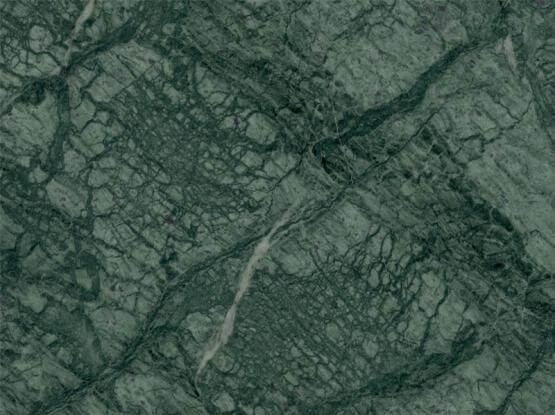 Marble
Deep emerald green with gold veining. Rajsamand, Rajasthan.
View Details →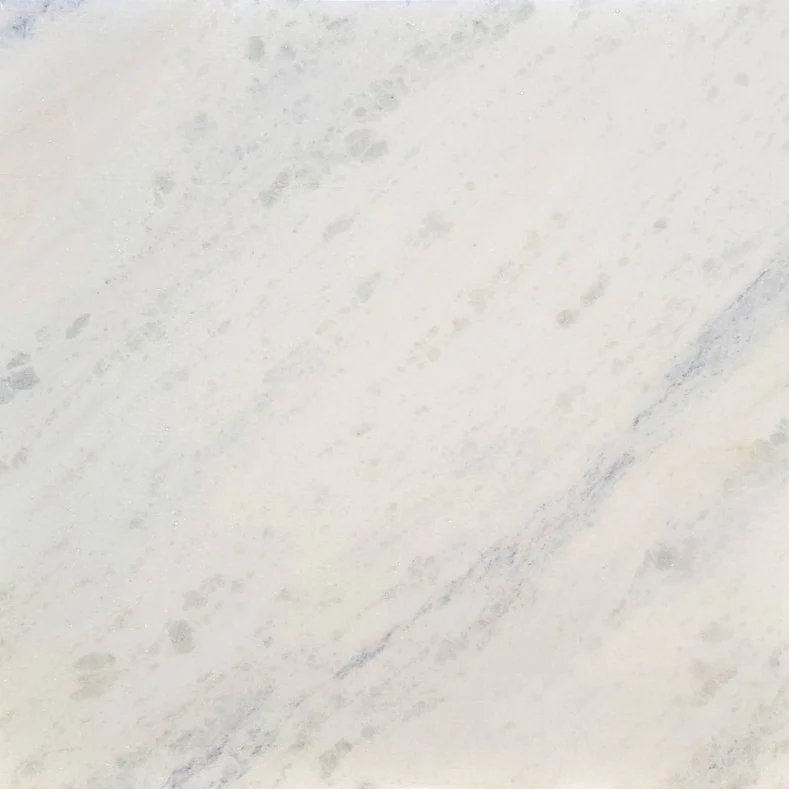 Marble
Crisp white with grey movement. Southern Rajasthan.
View Details →