 Marble
View Details →
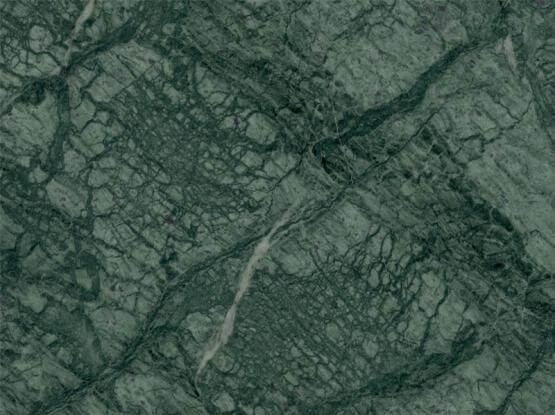
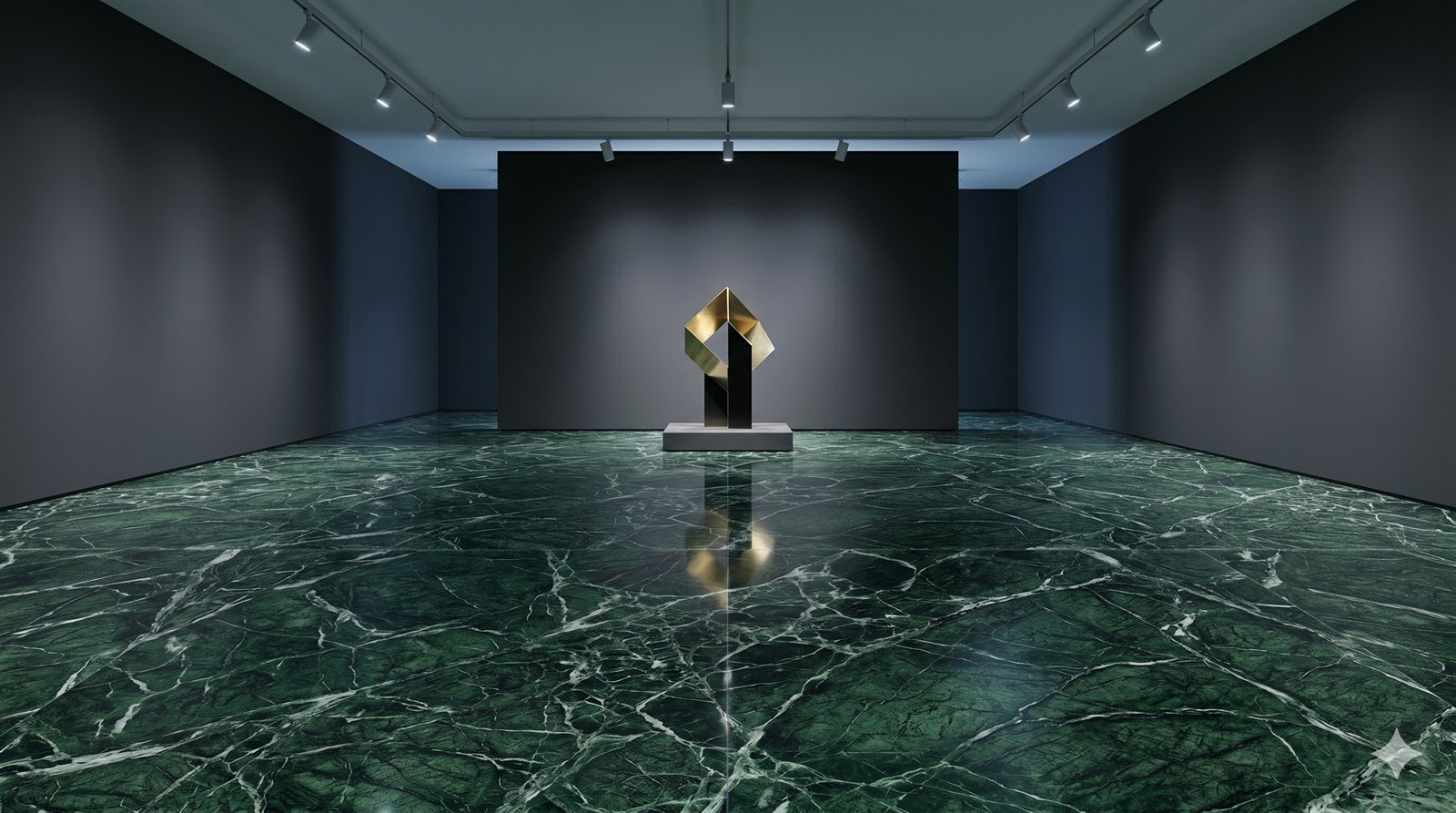
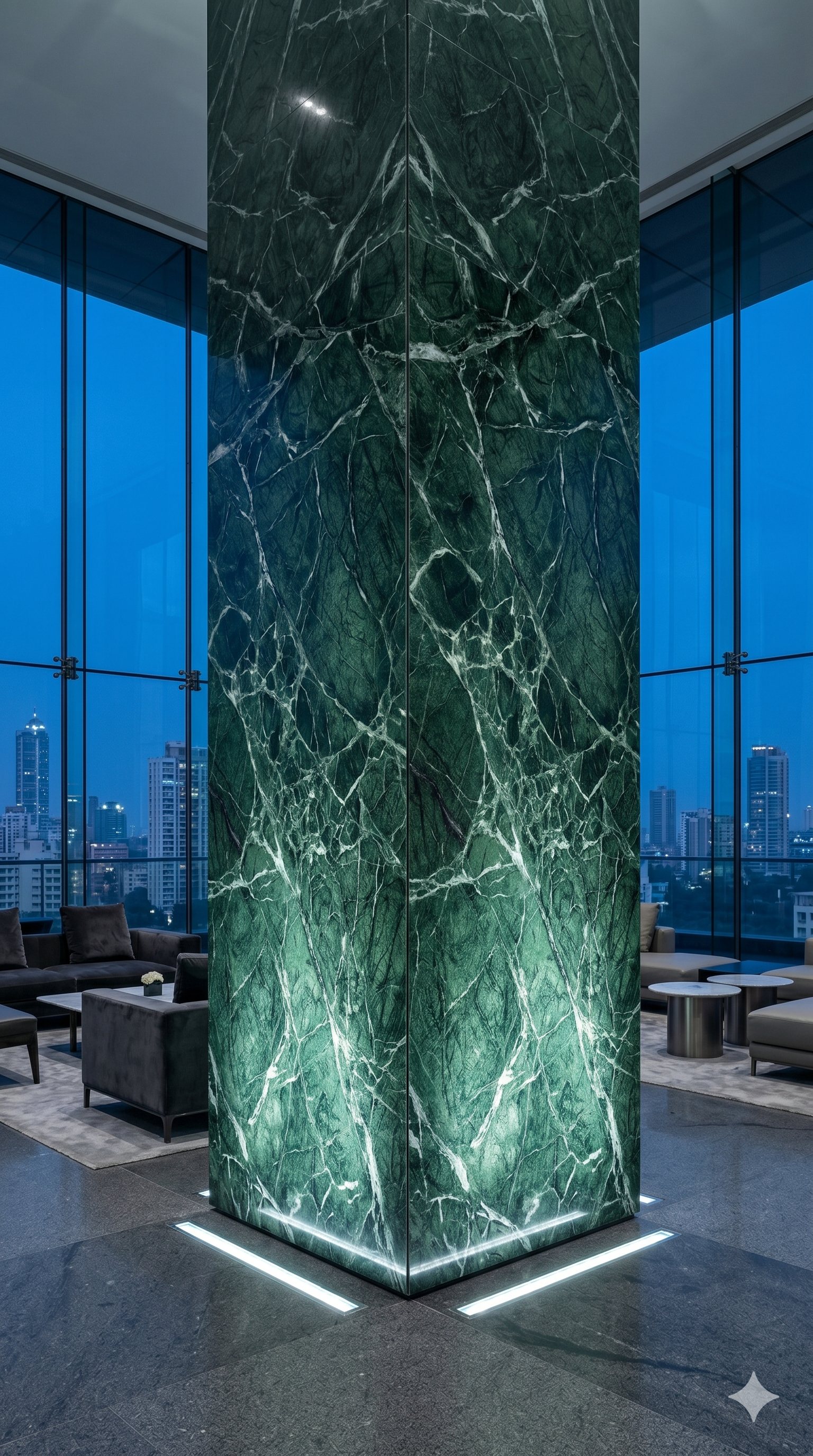
Forest Green Marble
Deep emerald green. Rajsamand.
View Details →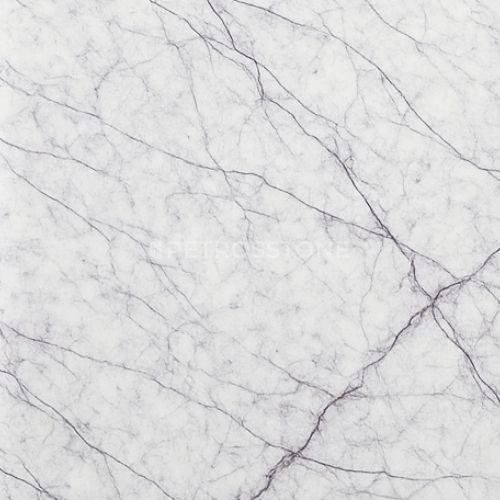
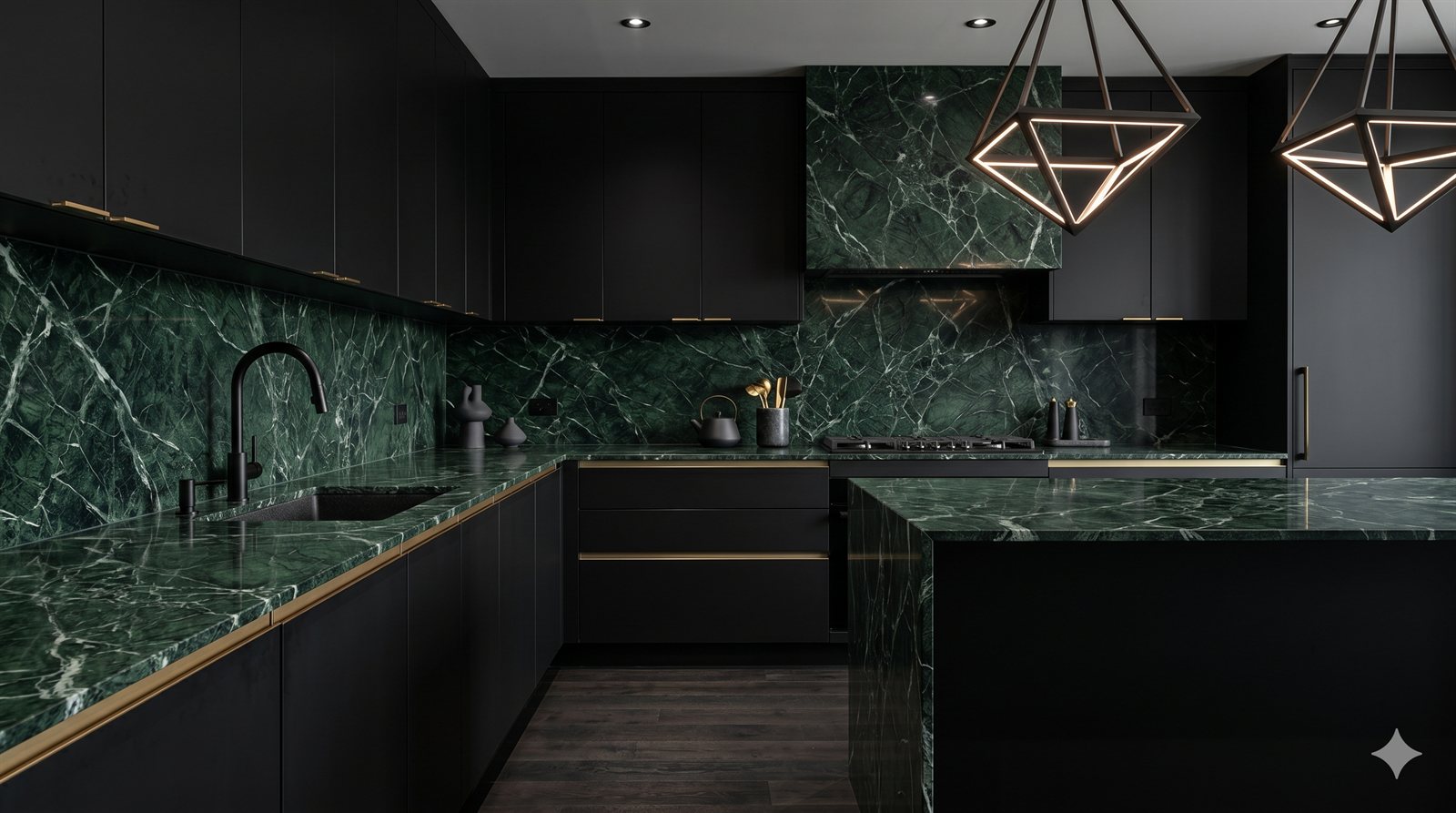
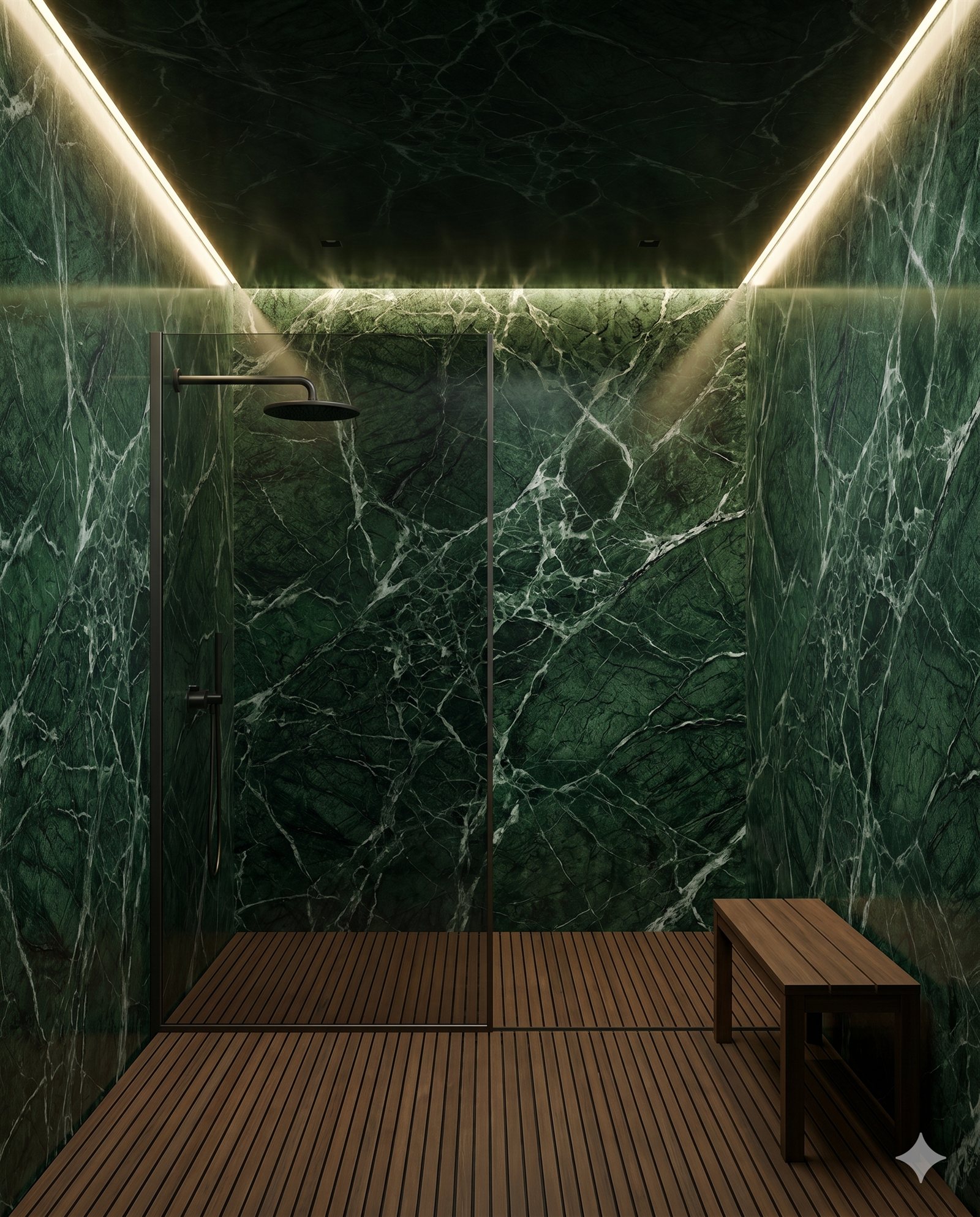
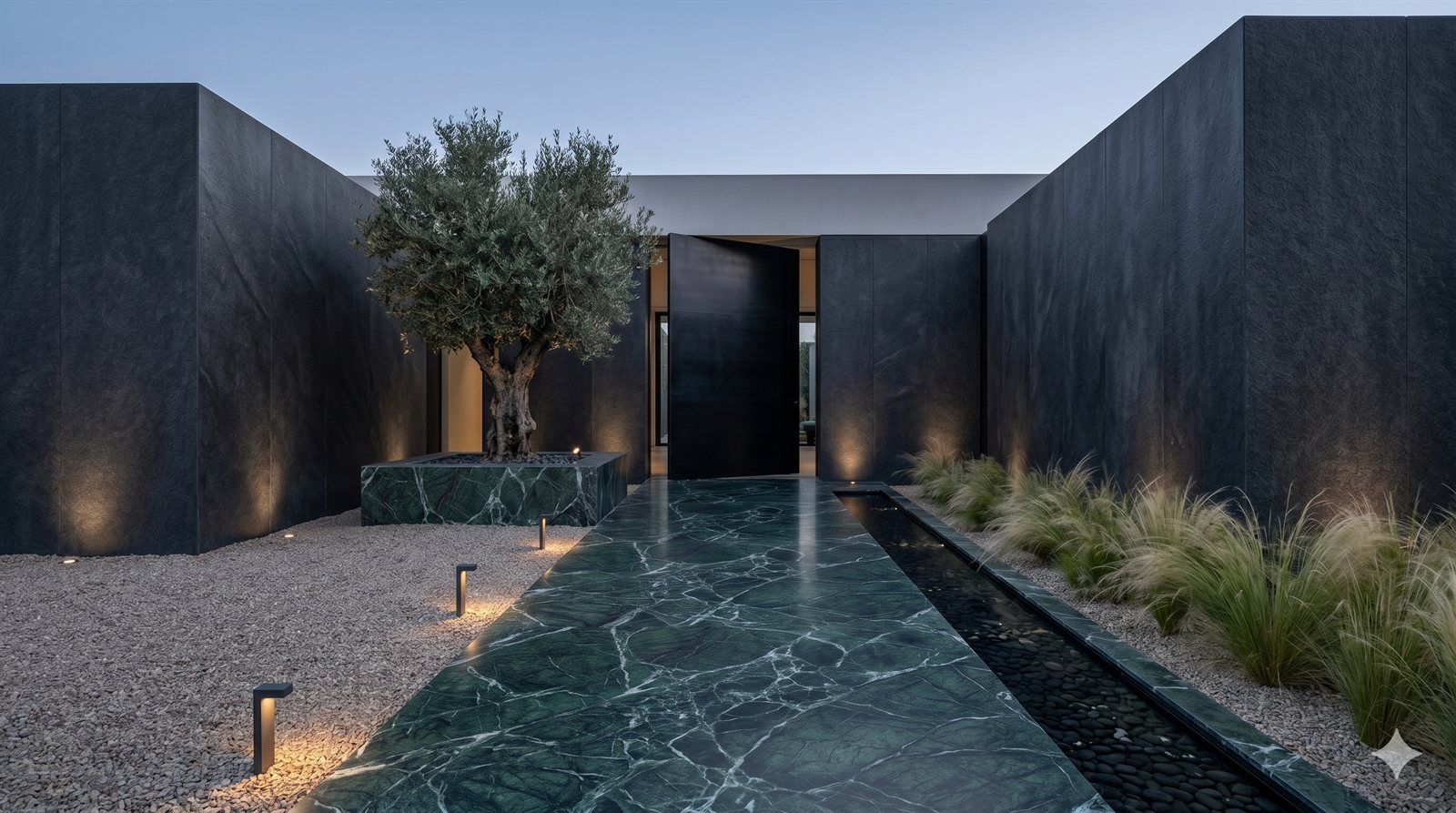
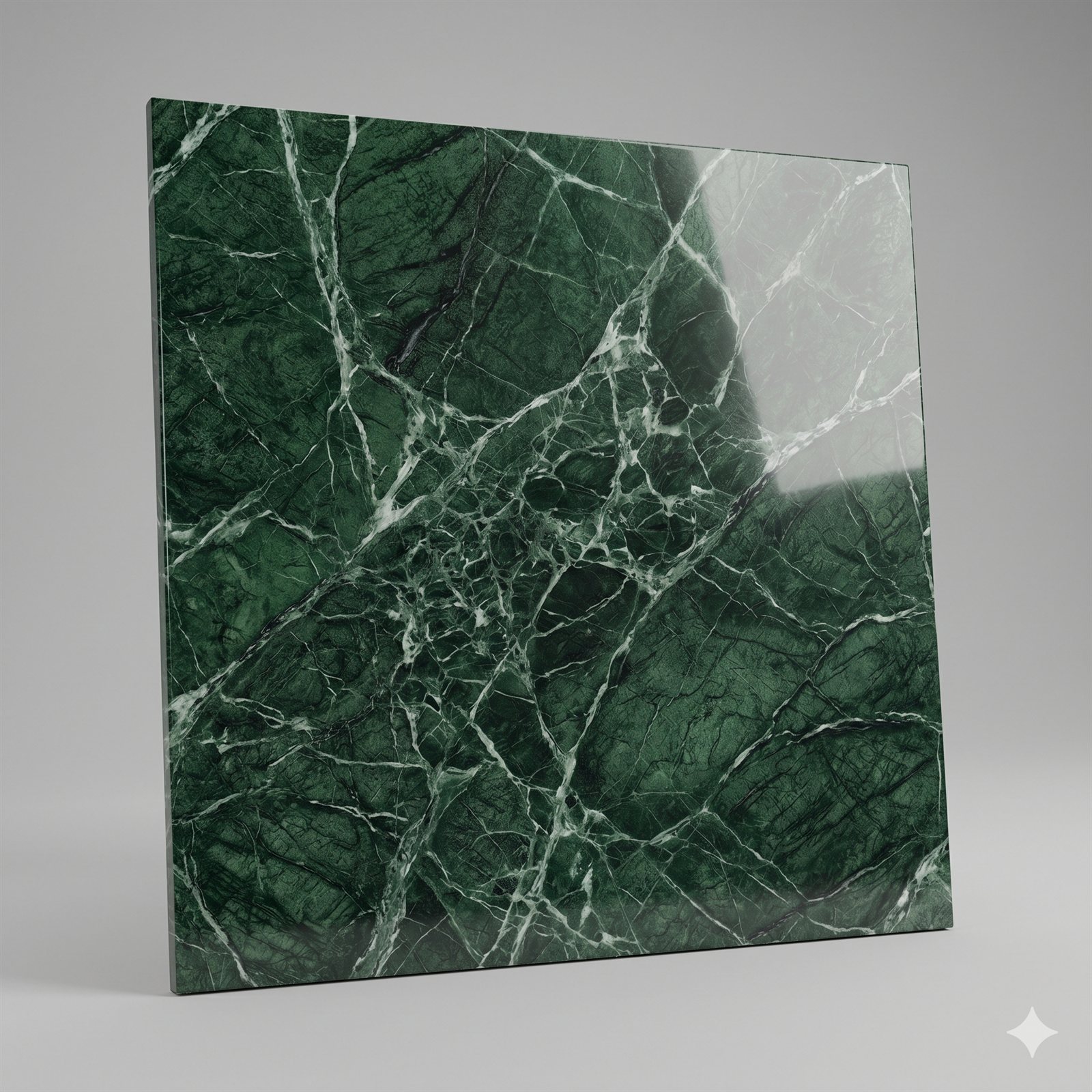
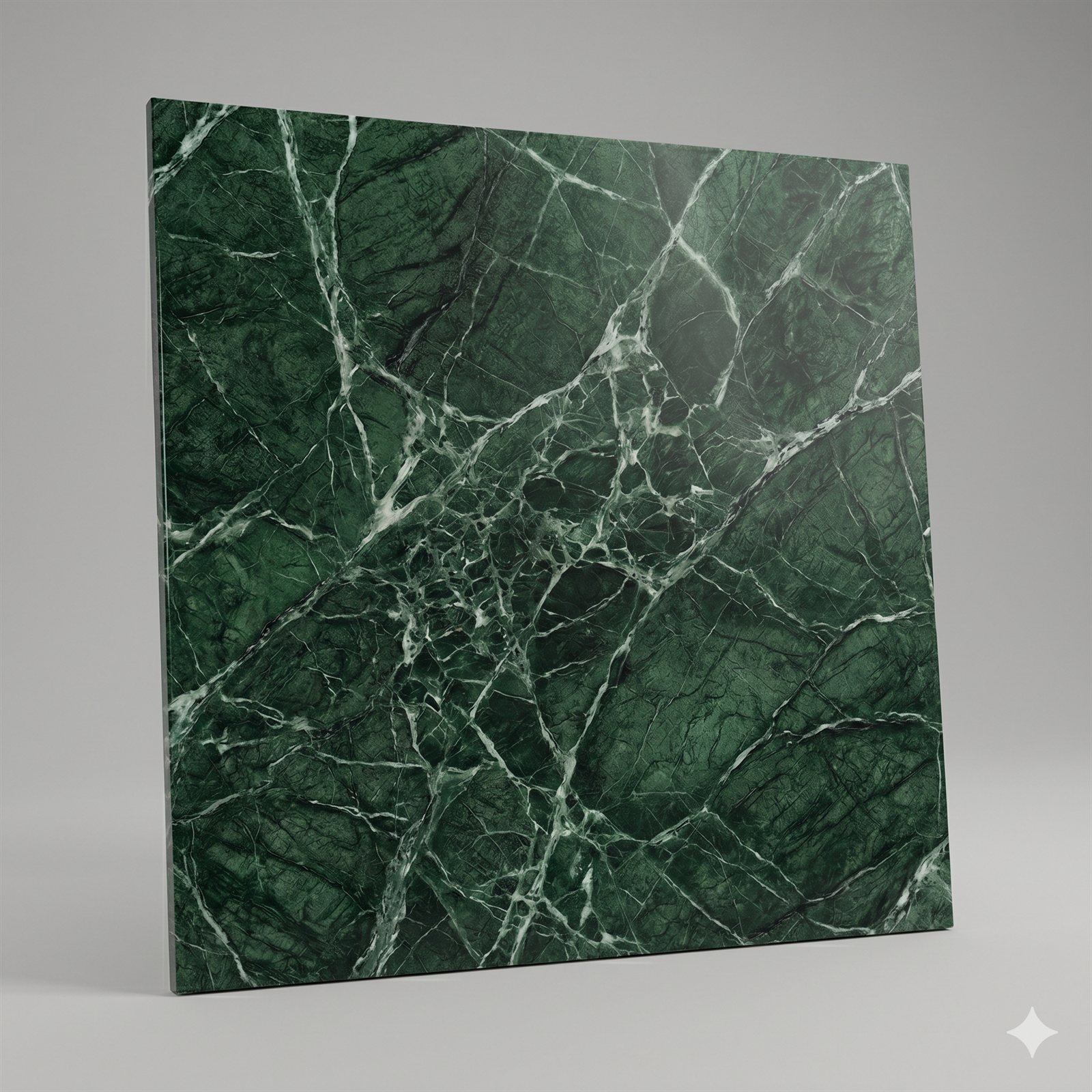
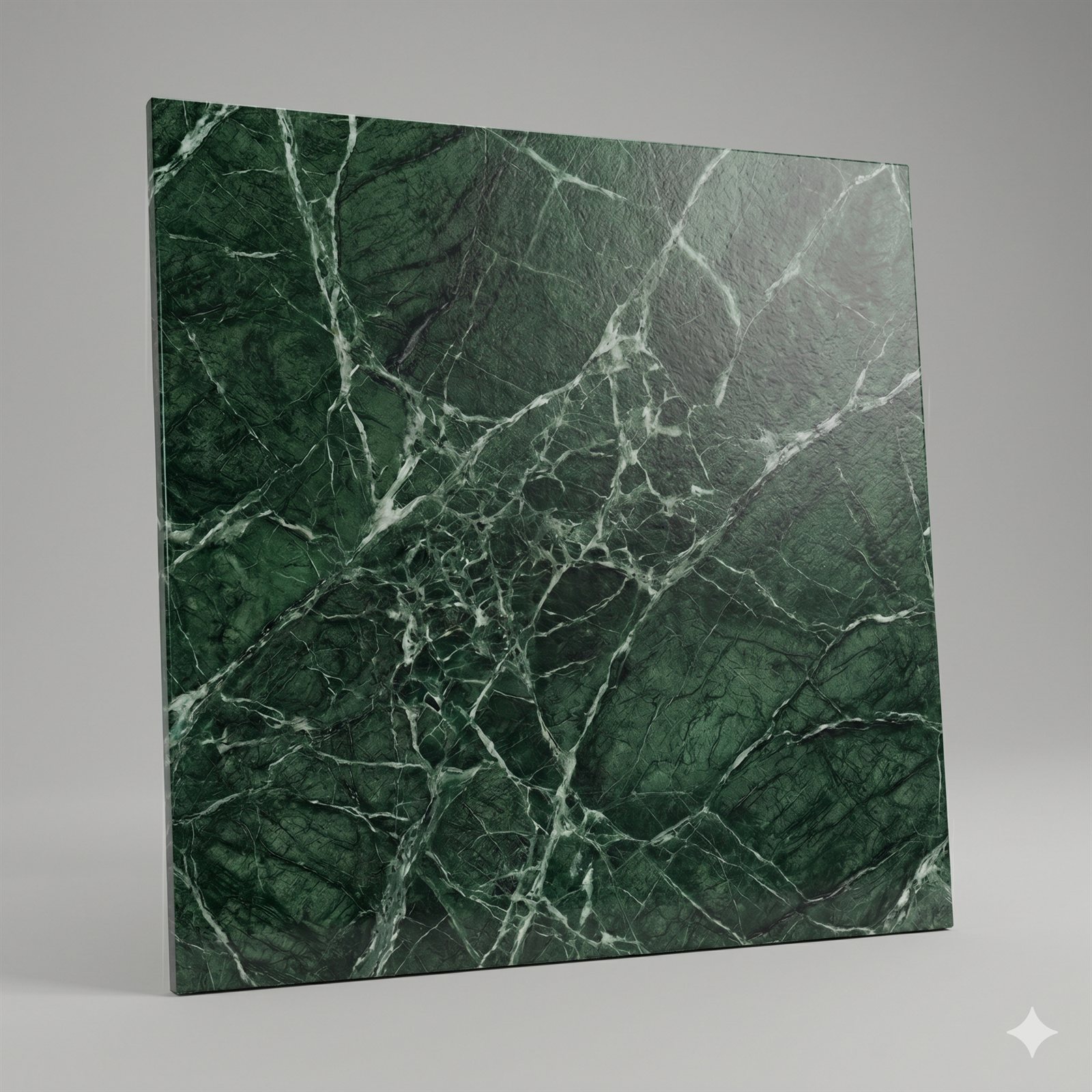
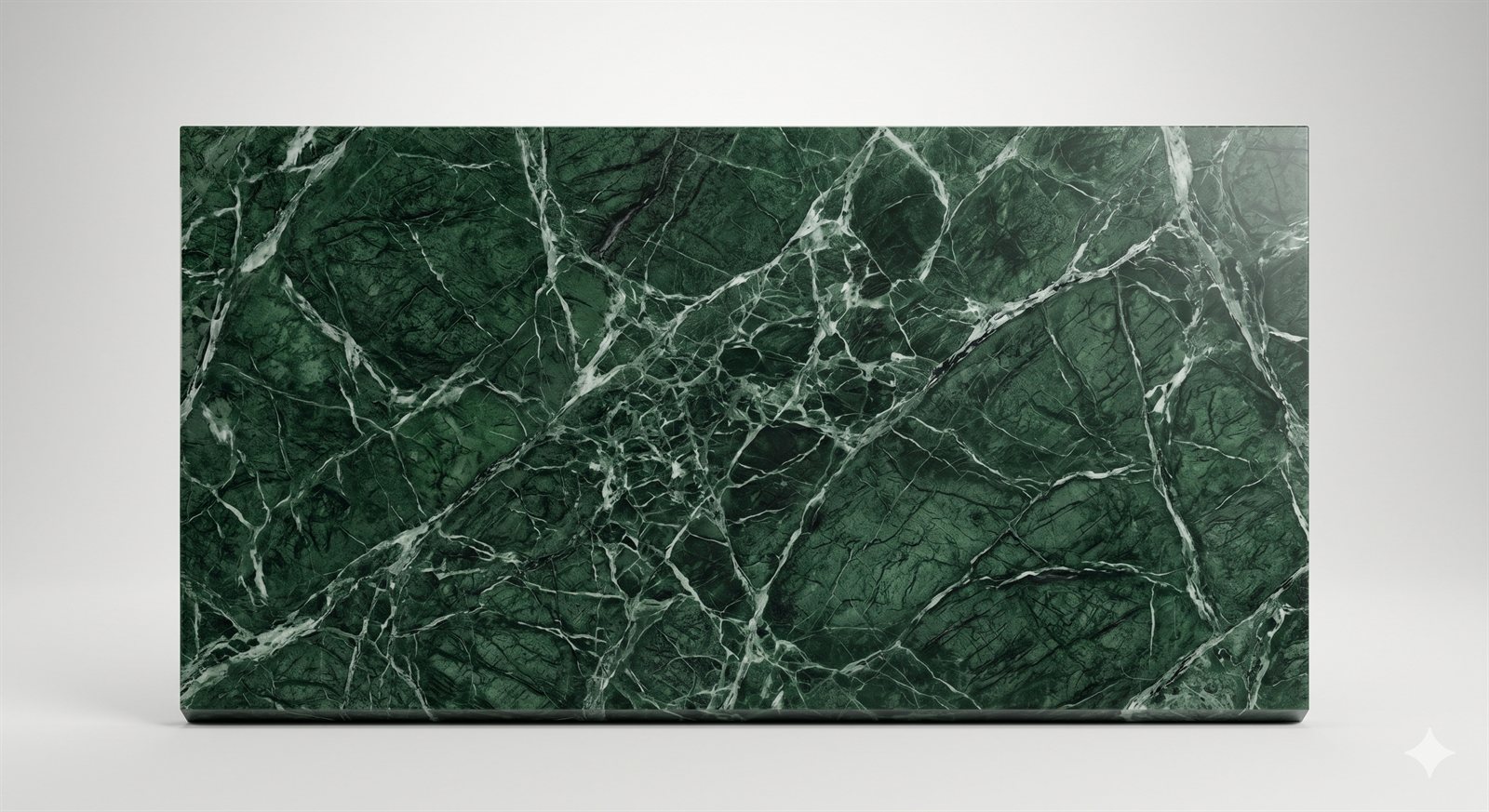
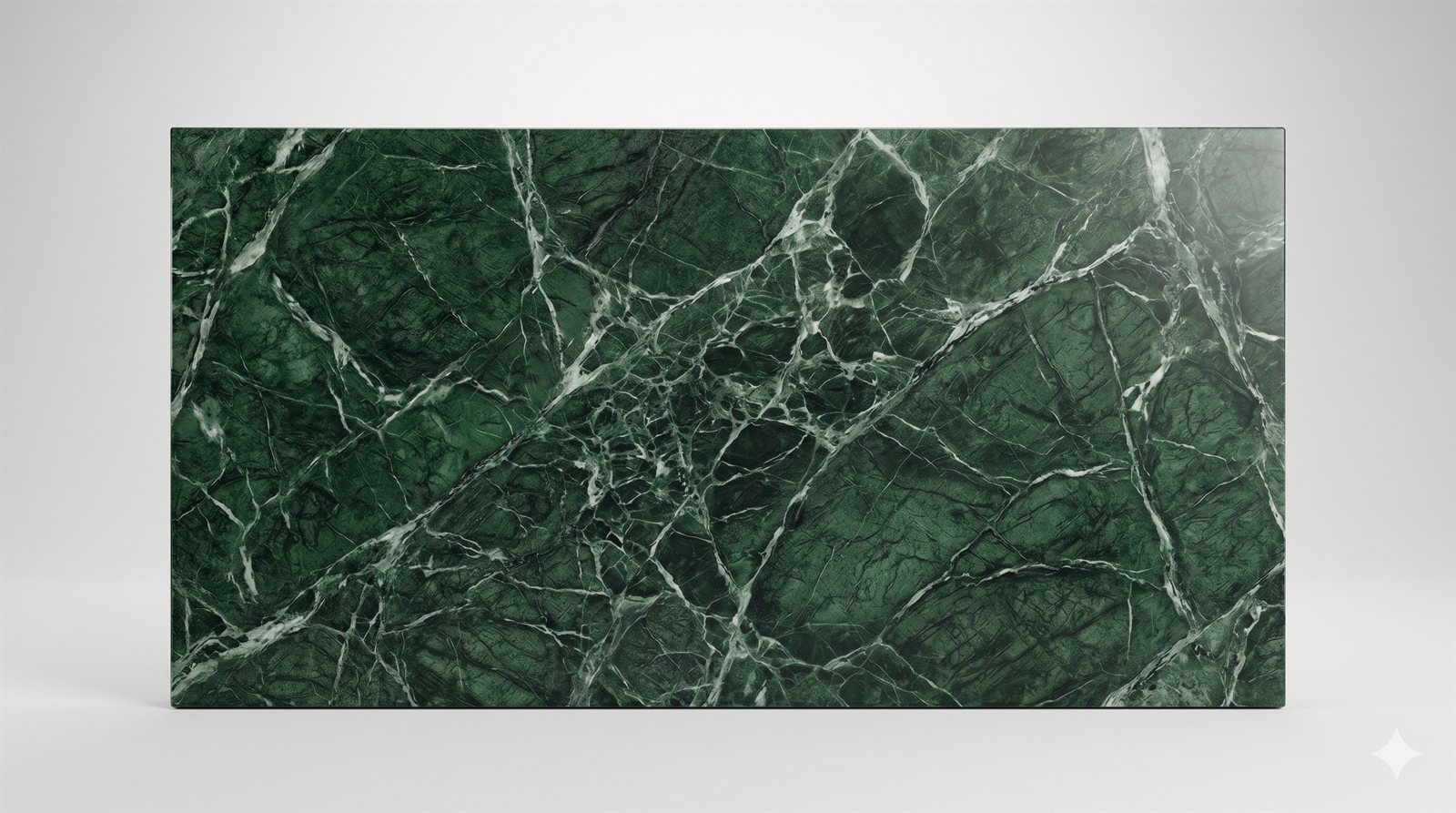
FOB Mundra / Nhava Sheva. MOQ and pricing vary by specification.
Banswara district in southern Rajasthan is named for the bamboo forests that once covered its hills — but beneath those hills lies one of India's most visually striking marble deposits. Banswara Purple Marble is quarried from formations within the Precambrian Banded Gneissic Complex of the Aravalli range, where the parent limestone was subjected to intense regional metamorphism approximately 1,600 million years ago. The result is a stone of exceptional density, hardness, and permanence — carrying colour patterns fixed at the mineral level long before any quarrying began.
The quarry region in Banswara district is remote by Rajasthan standards, which has historically limited production volumes and kept this marble outside the mass-export mainstream. That limited supply is part of what makes Banswara Purple distinctive in the international market.
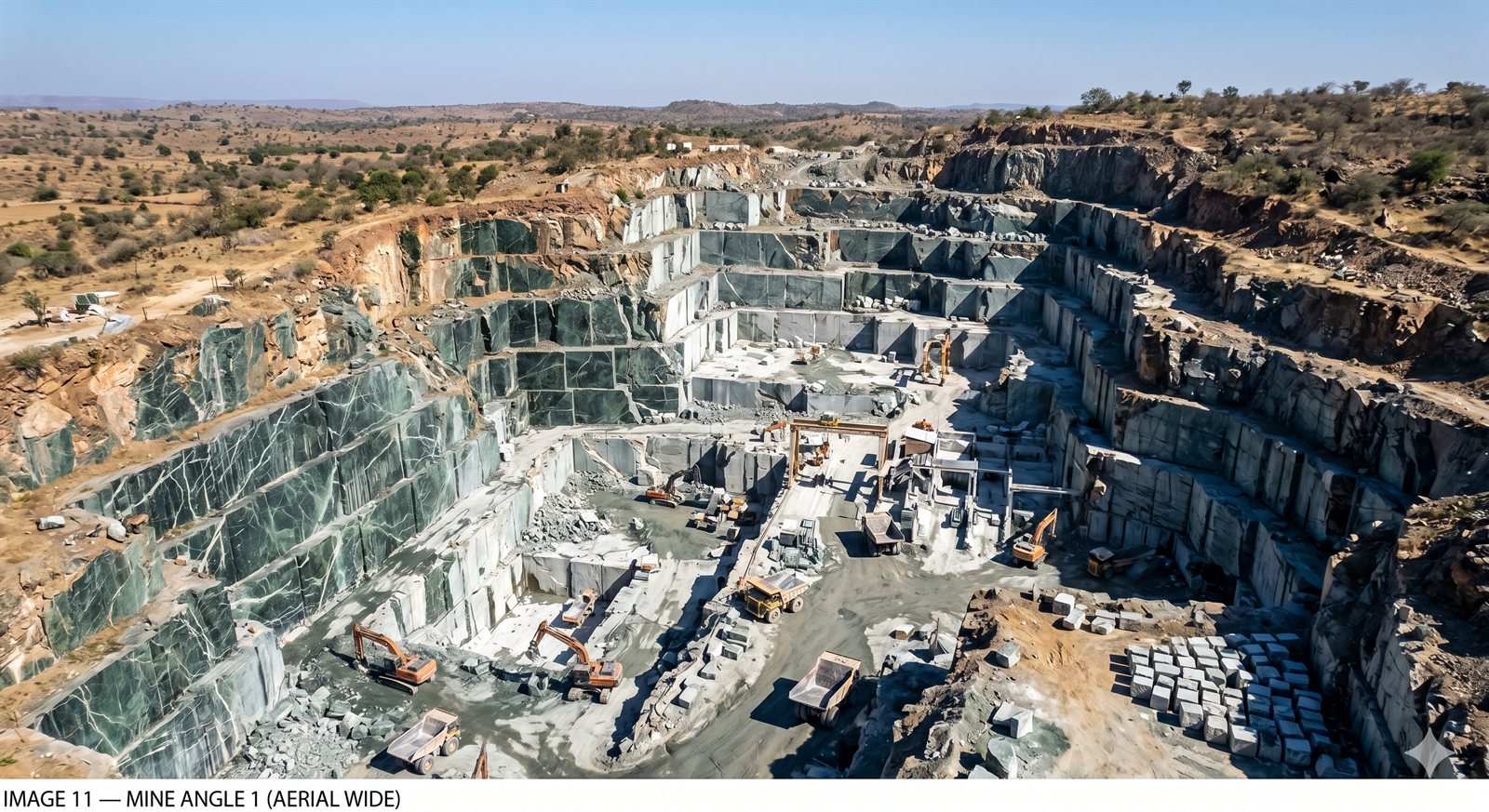
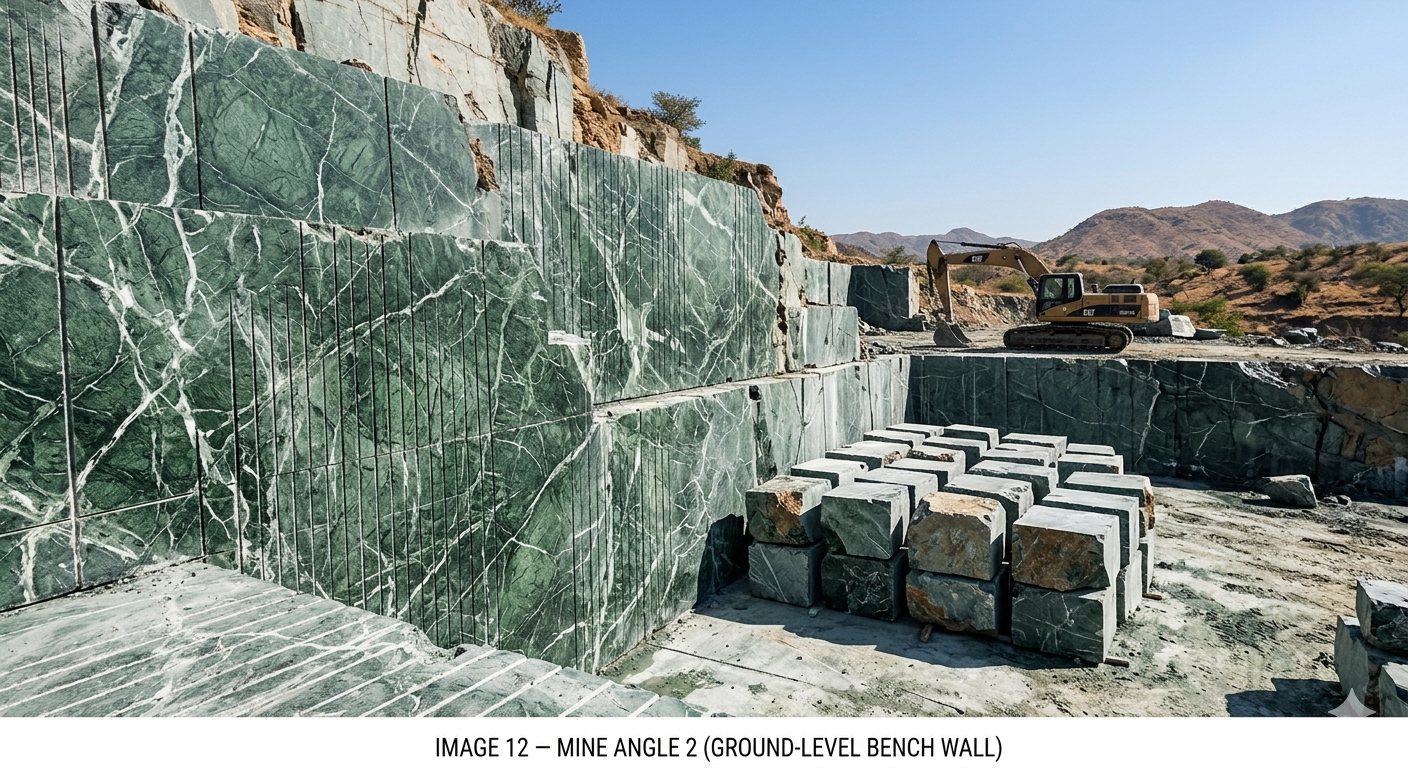
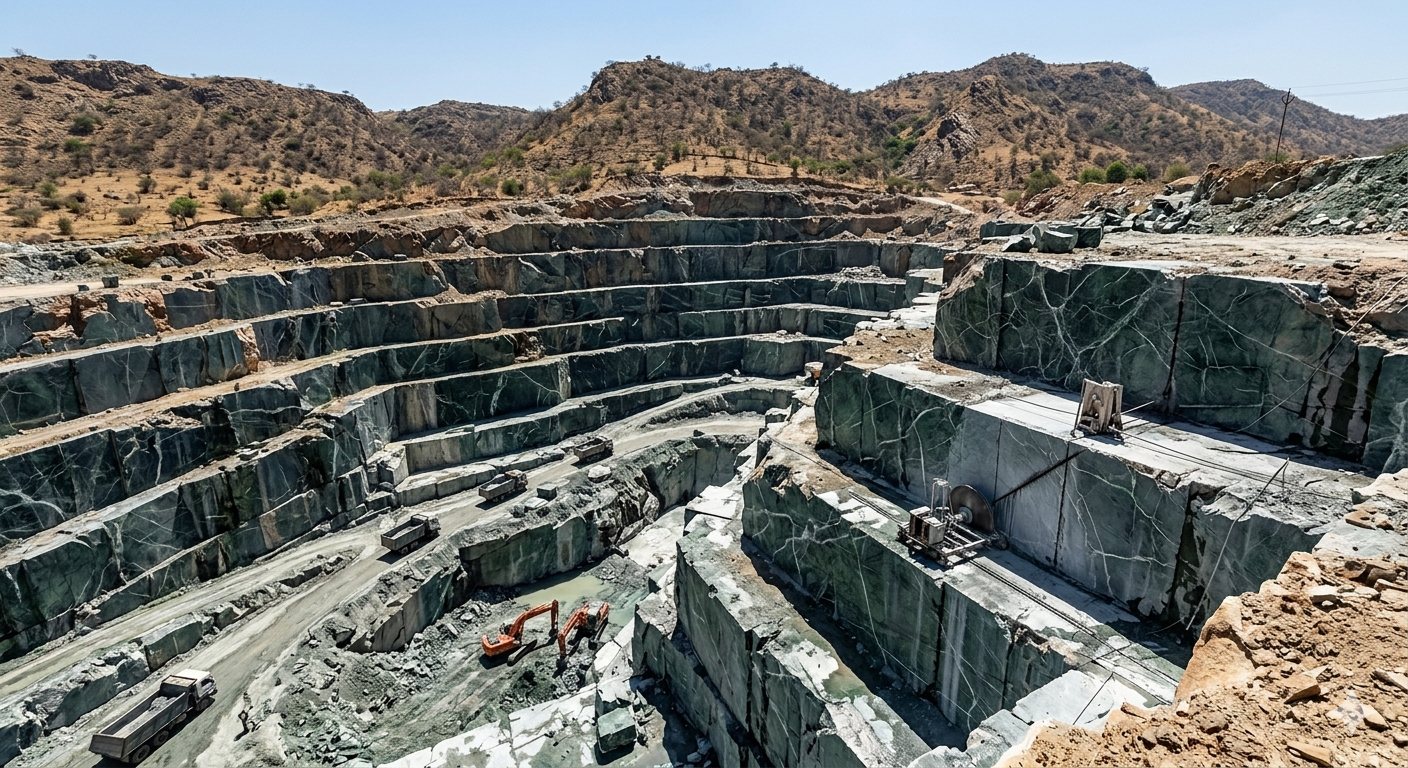
Indicative quarry views — actual sourcing site varies by stone
The purple and violet coloration is caused by a combination of iron oxide compounds and manganese-bearing minerals within the marble matrix. These pigments are part of the stone's crystalline structure — they cannot be removed, bleached, or replicated by surface treatment. The cream and warm gold veining patterns are calcite-rich intrusions that followed natural fracture pathways through the stone during later pressure events.
Individual slabs show considerable variation. Some lean toward deep amethyst purple with pronounced and frequent veining; others present as cooler violet-grey with minimal patterning and a more restrained visual character. This natural variation means that slab selection is an important step — we recommend requesting a physical slab preview or high-resolution photography before confirming large project quantities.
Banswara Purple is a material that commands attention and works best where a visitor will spend time looking at the surface. Our project records show it most often specified for bathroom feature walls in spa-grade residential and hospitality designs, reception desk cladding, wine cellar flooring and wall panels, luxury residential staircase treads and risers, and bespoke furniture tops where the stone serves as a statement surface.
Our gangsaw slabs are used as full-height wall cladding panels in hospitality and commercial interiors. Cutter slabs work well for bathroom vanity countertops, island tops in residential kitchens, and linear feature strips in otherwise neutral stone schemes where a single run of purple creates focal contrast.
Polished finish renders the full depth of purple coloration and brings out the contrast between the stone body and its veining. This is the finish chosen by most architects working with Banswara Purple — the mirror quality makes the colour appear richer and more saturated. Honed finish softens the overall presentation, producing a more understated matte surface that reads closer to muted violet-grey, with a more natural and less formal character.
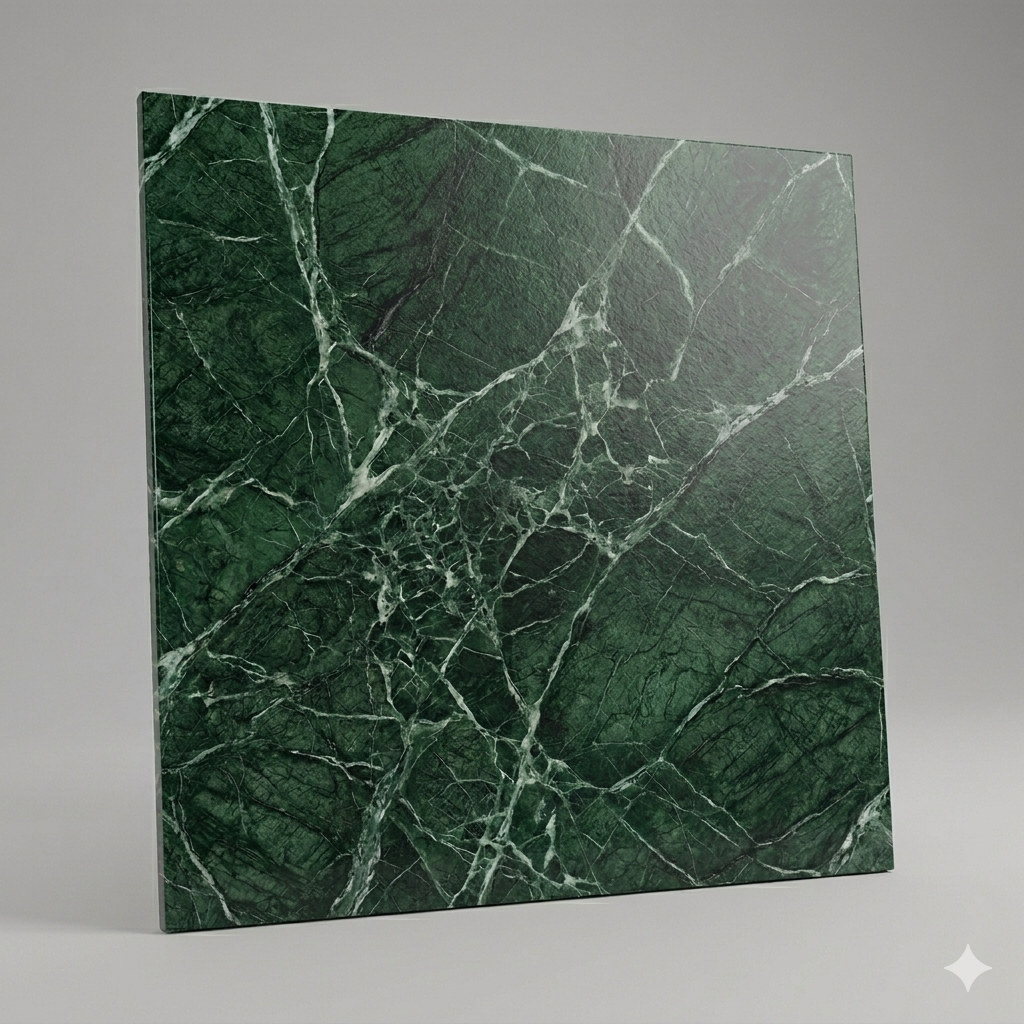
This stone is supplied in two production formats. Gangsaw slabs are large-format slabs for premium architectural projects requiring continuous surfaces. Cutter slabs are smaller-format slabs optimised for residential installations and tile production.
Custom tile sizes available: 60×60 cm, 60×90 cm, 90×90 cm. Cut to specification at our Rajasthan facility.
Due to the stone's inherent density, it accepts finishing well and holds its surface quality with standard marble maintenance: annual sealing, pH-neutral daily cleaning, and prompt attention to acidic spills such as wine, citrus juice, or vinegar-based products, which can etch the calcite component of the stone over time. A penetrating sealer applied immediately after installation protects against staining and simplifies long-term upkeep.
MarbleDeep emerald green. Rajsamand.
View Details →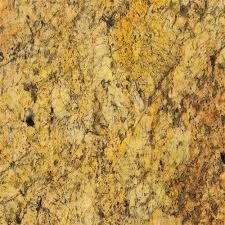 North Indian Granite
Warm golden-beige. North India.
View Details → South Indian Granite
Pure jet black. Mirror polish.
View Details →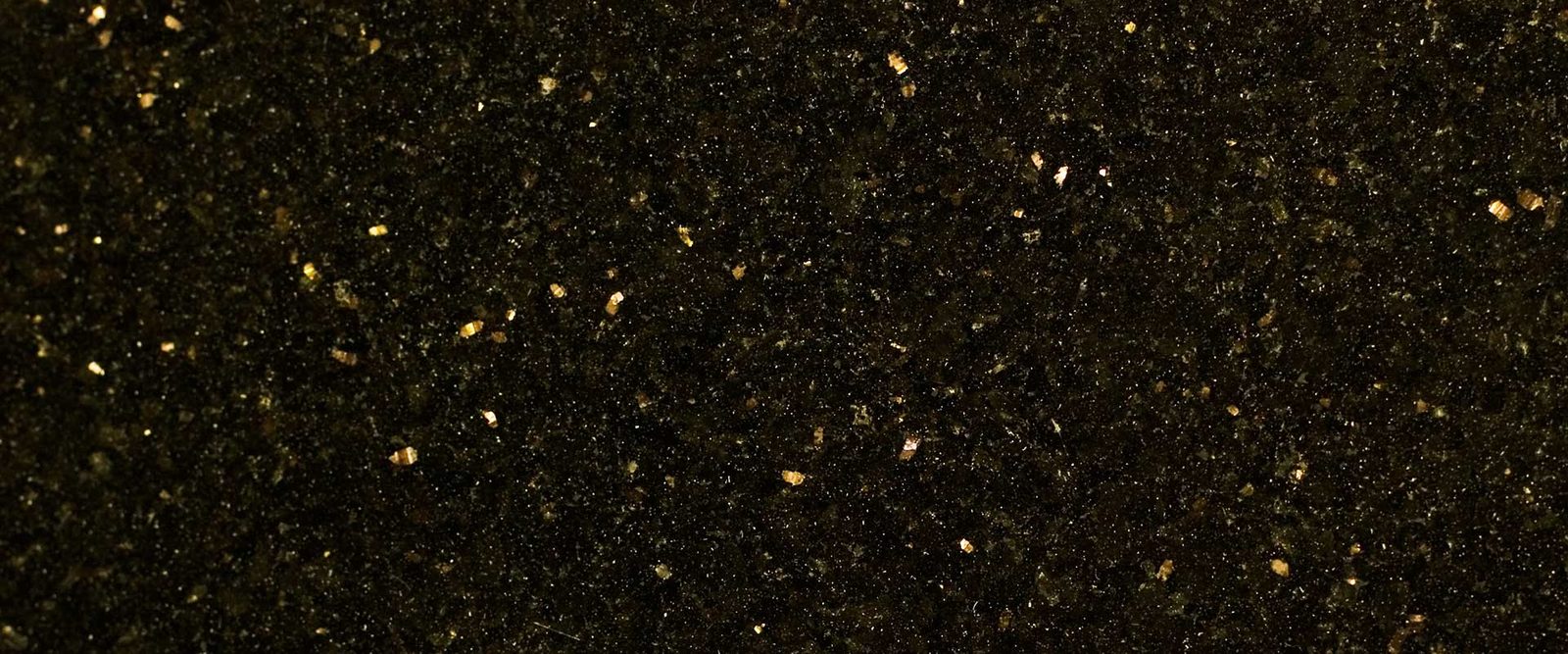 South Indian Granite
Gold starburst speckles. Andhra Pradesh.
View Details →