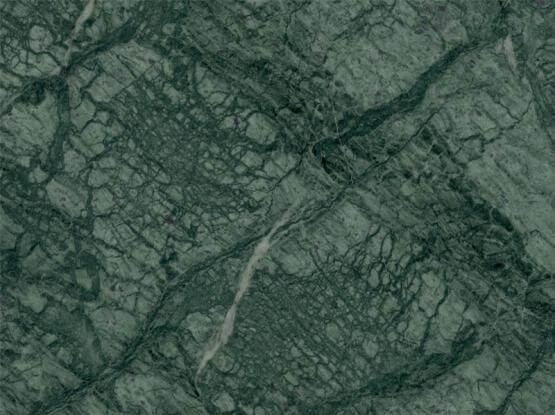
 Marble
View Details →
Forest Green Marble
Deep emerald green with gold veining. Rajsamand, Rajasthan.
View Details →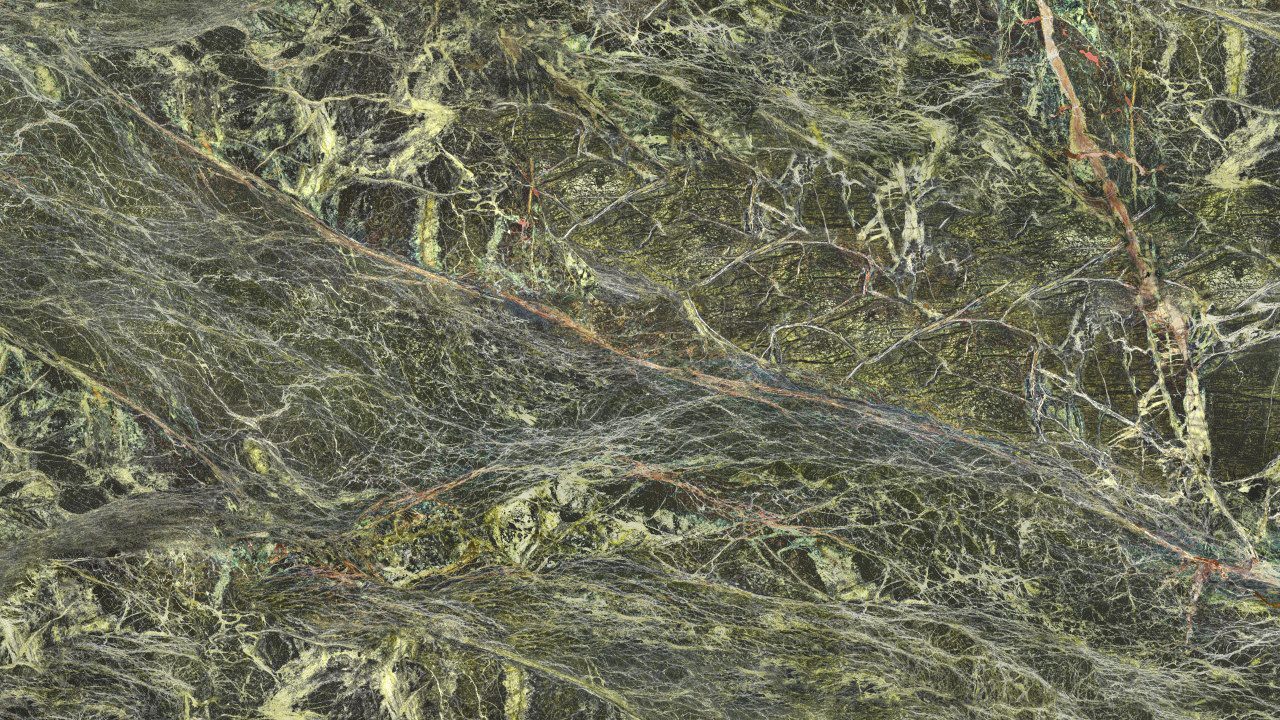
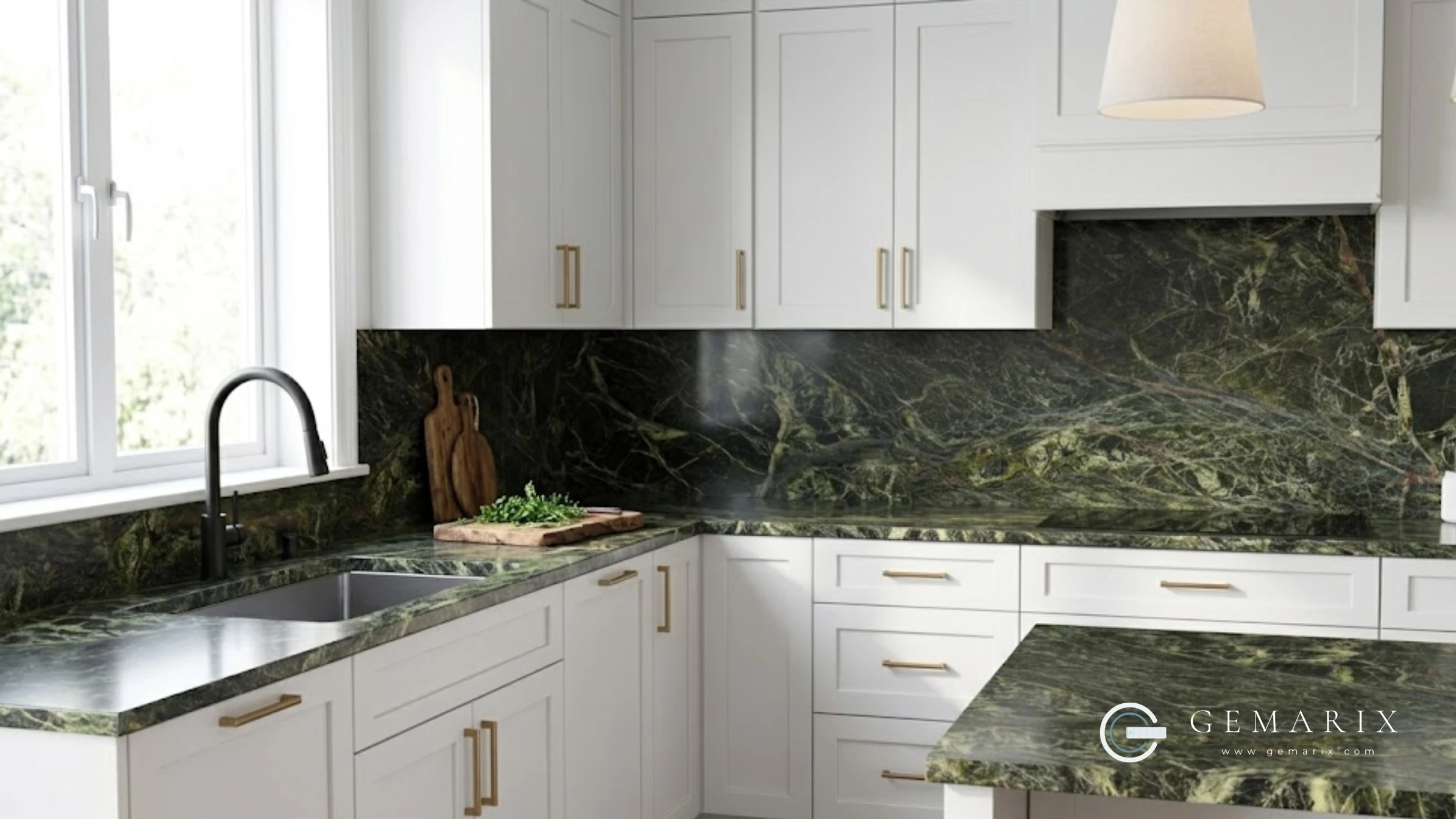
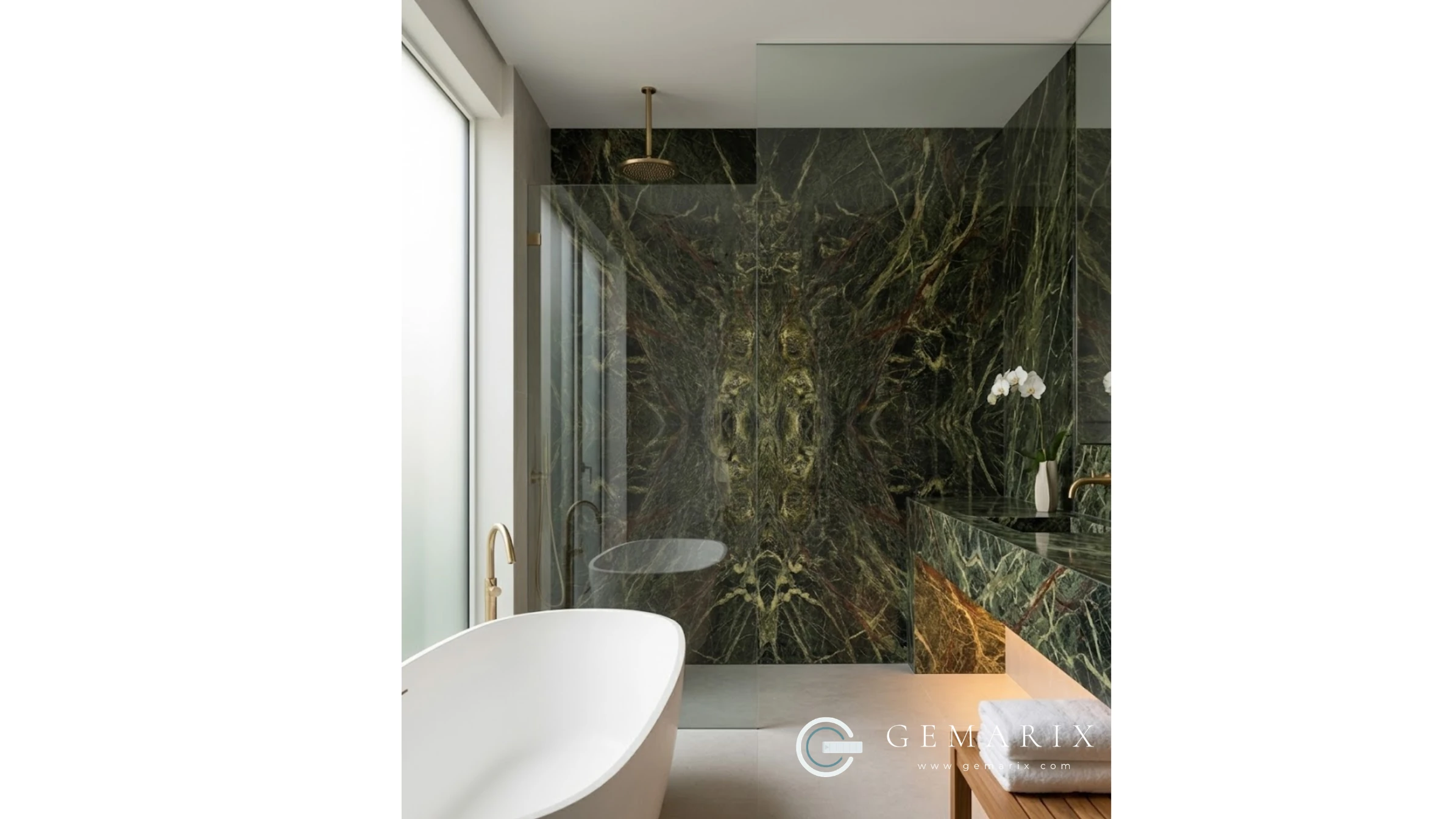
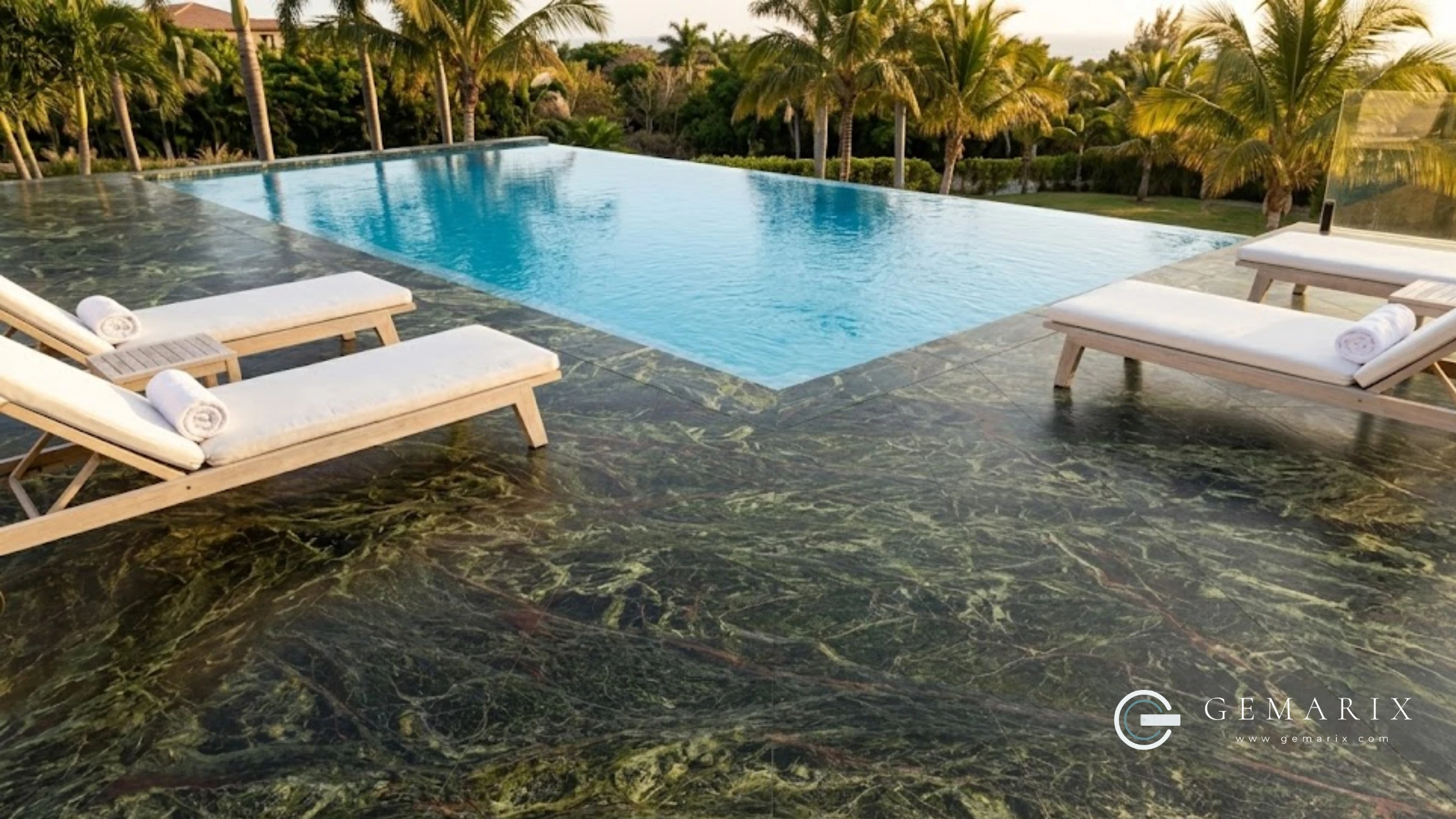
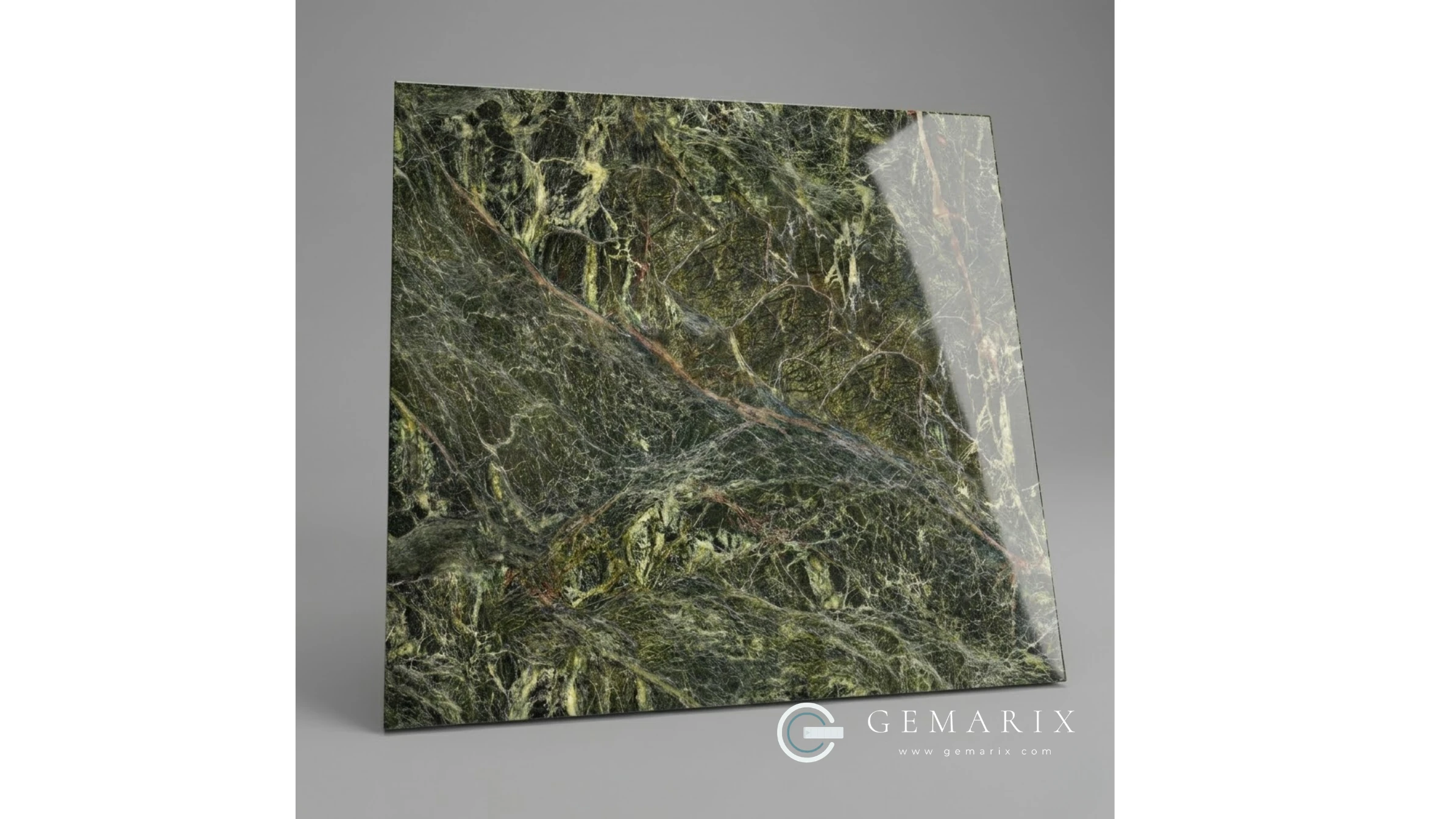
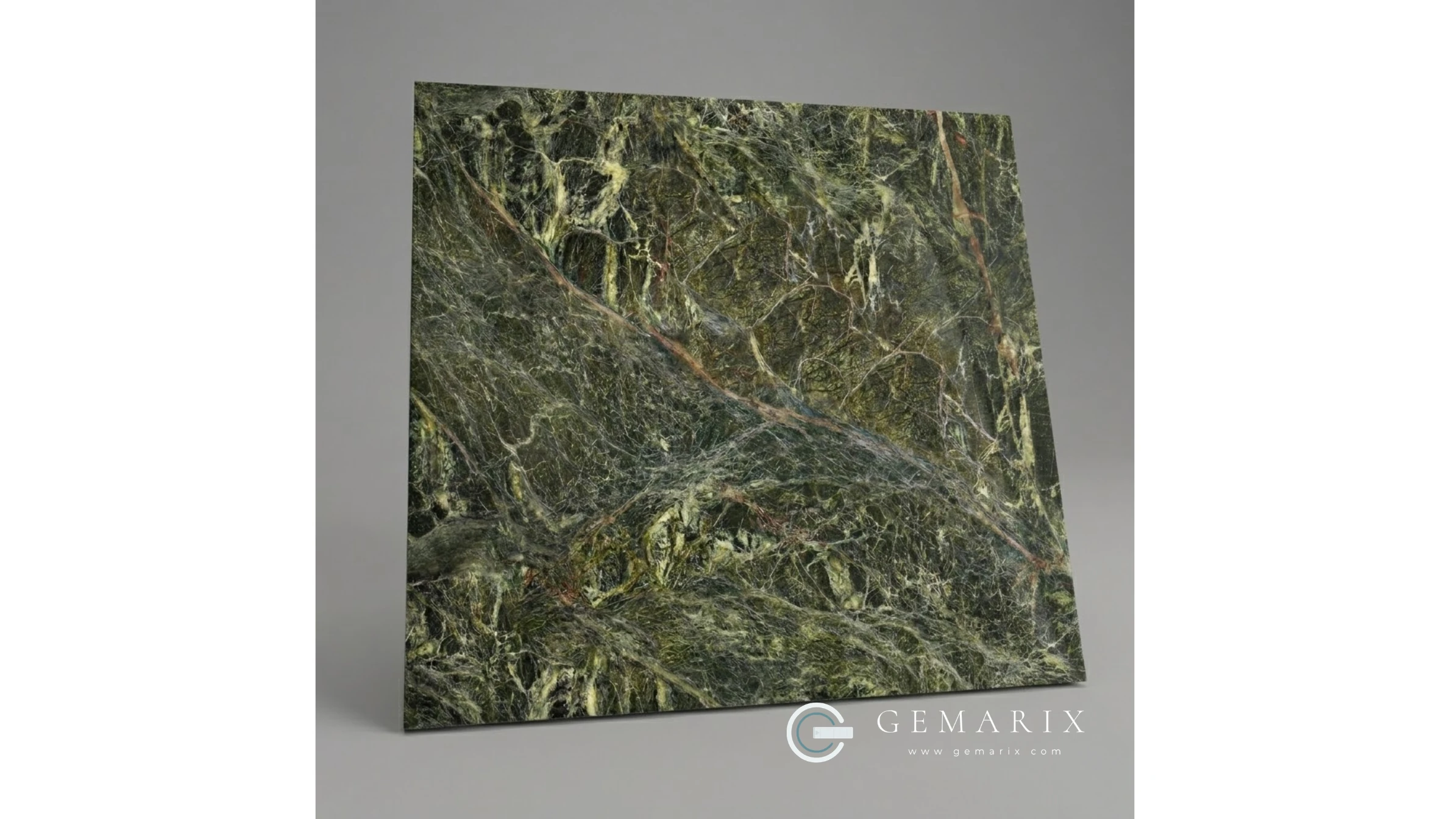
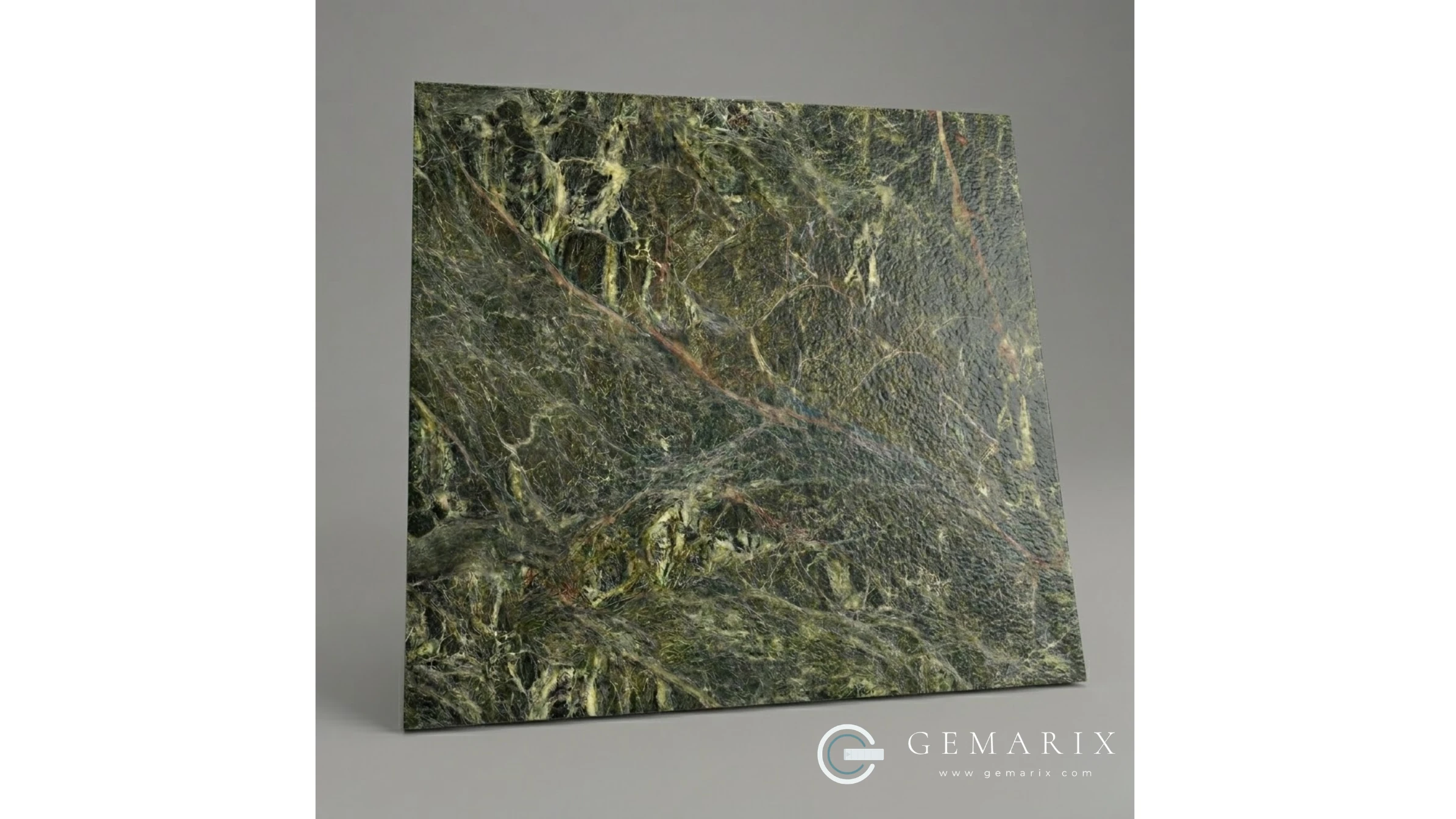

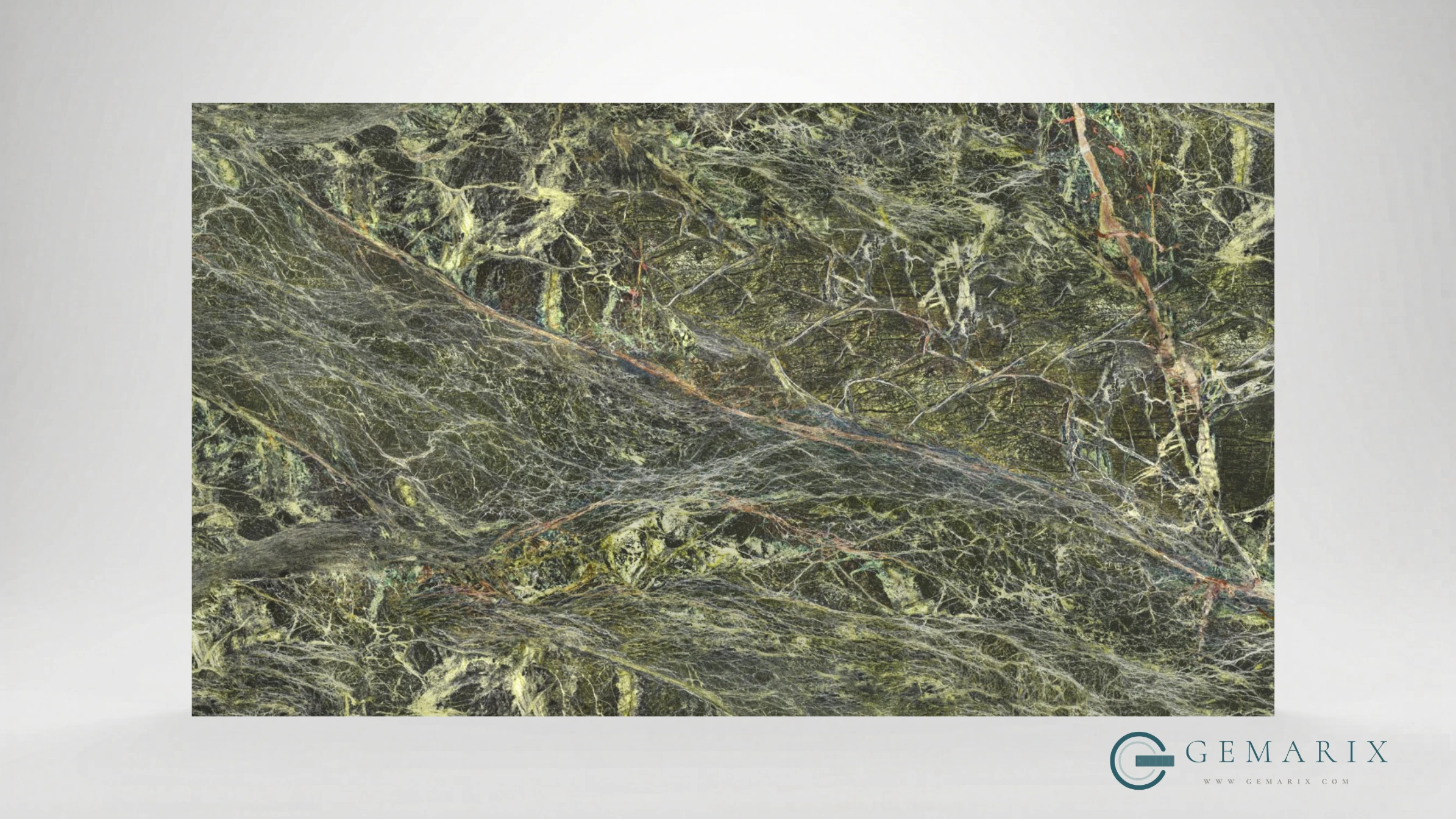
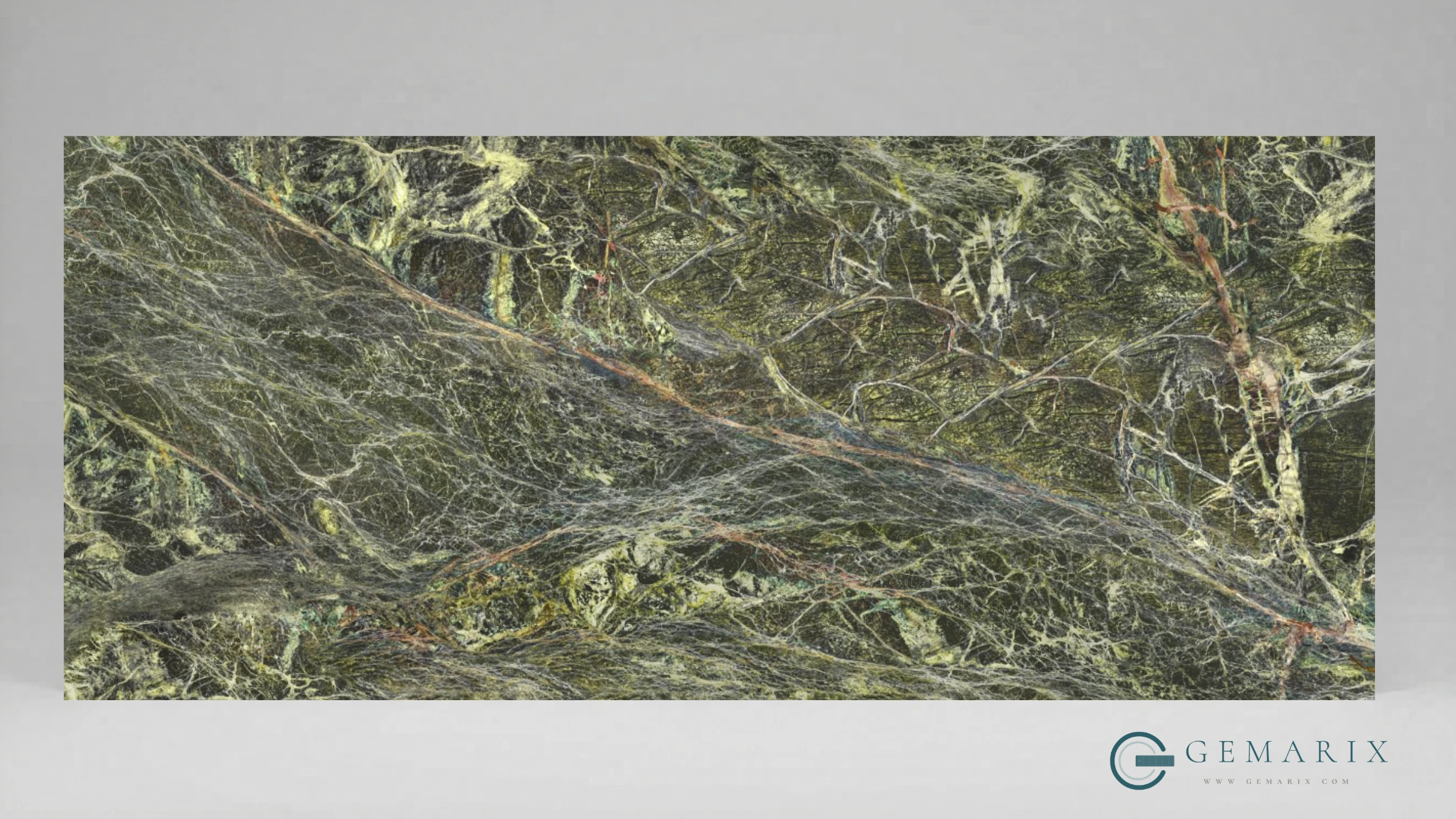
FOB Mundra / Nhava Sheva. MOQ and pricing vary by specification.
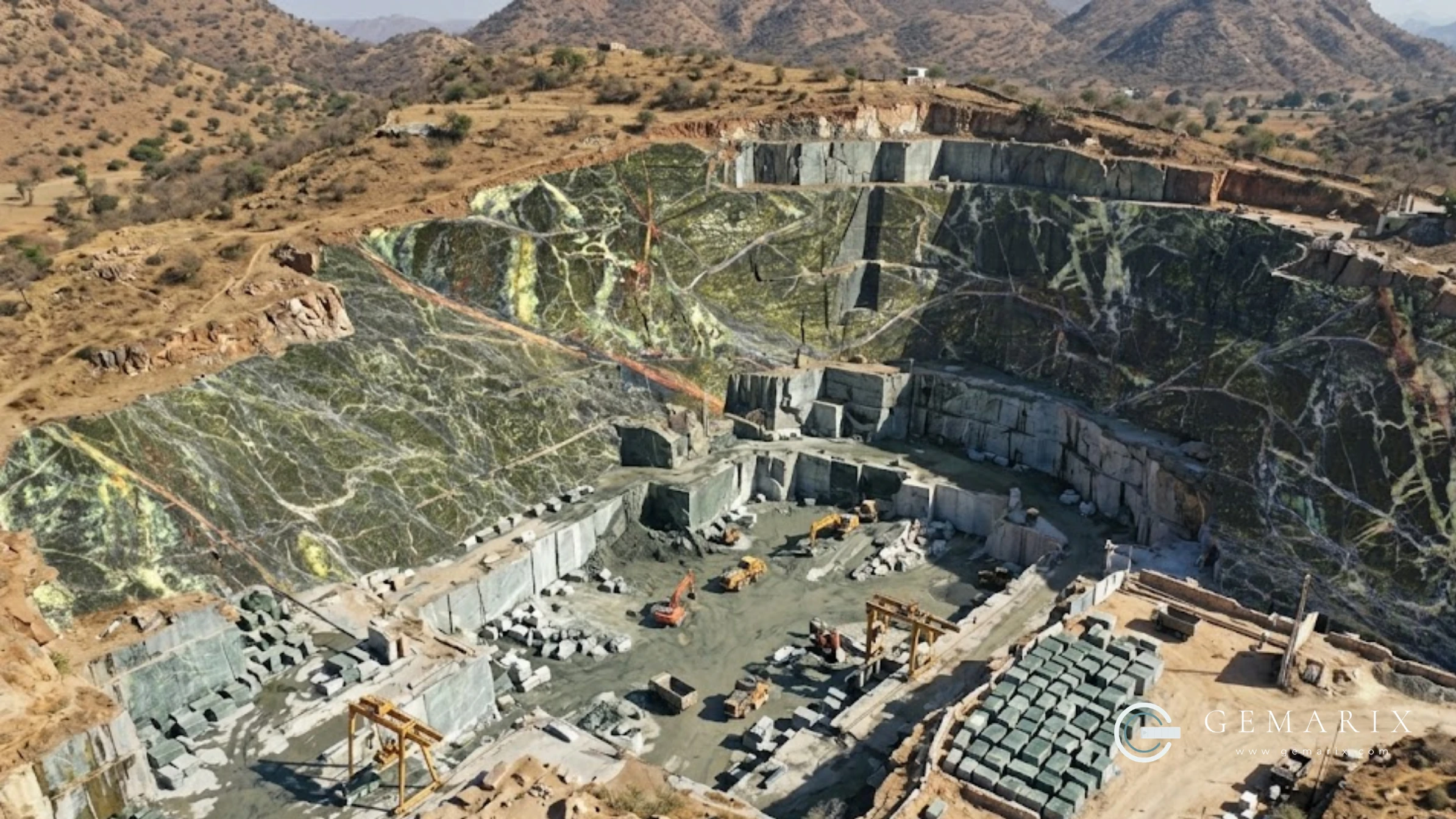
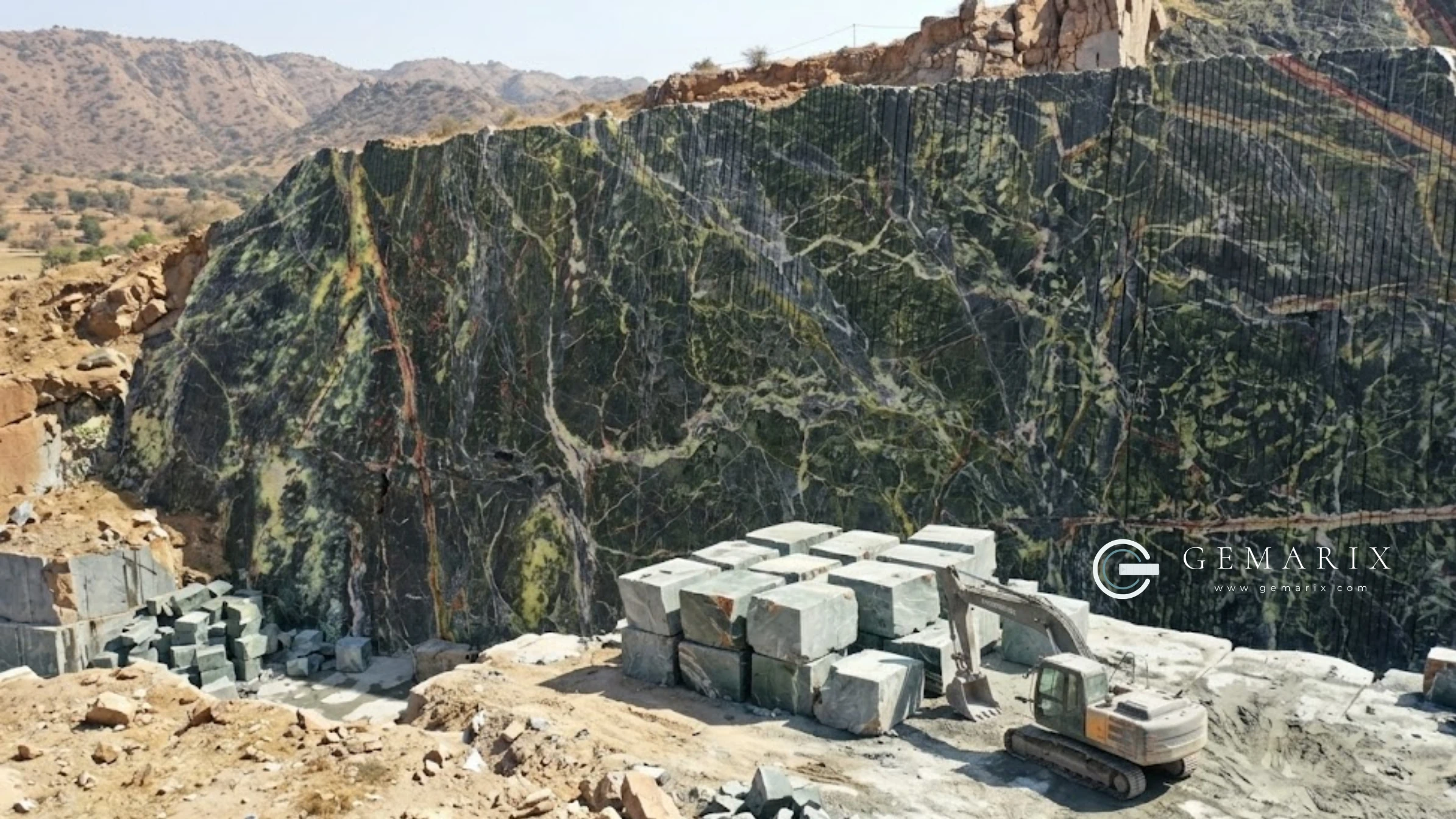
Rainforest Green Marble is quarried from the marble-bearing formations of Rajasthan, a state whose geological diversity produces some of the most visually striking natural stones in India. The Aravalli range — among the oldest mountain systems on earth — runs through this region, its ancient metamorphic zones responsible for the intense mineral concentrations that produce this stone's characteristic deep greens and bold dark veining patterns.
Quarry selection is central to the consistency of this material. Our team inspects blocks at source, rejecting faces that show excessive fissuring or colour inconsistency. What reaches our cutting and processing facility is material already curated for the export market — large, clean blocks from which gangsaw slabs are cut to maximise yield and visual impact.
Indicative quarry views — actual sourcing site varies by stone
The pronounced green ground colour results from chlorite, epidote, and serpentine group minerals distributed through the recrystallised calcite matrix during regional metamorphism. These silicate minerals are chemically stable and permanently bonded within the stone — the colour is intrinsic, not a surface coating or treatment. The dense black and white veining that defines Rainforest Green is formed by concentrations of graphite and quartz along natural fracture planes, giving the stone its distinctive high-contrast movement. Origin and specifications verified by Gemarix.
Rainforest Green reads differently from most green marbles. Where other greens can appear muted or uniform, this stone has genuine visual density — a dark, layered green ground crossed by bold veining that shifts from near-black to off-white depending on angle and light. Polished slabs have a depth that reads almost three-dimensional, while honed surfaces soften the contrast and bring out a more earthy, understated character.
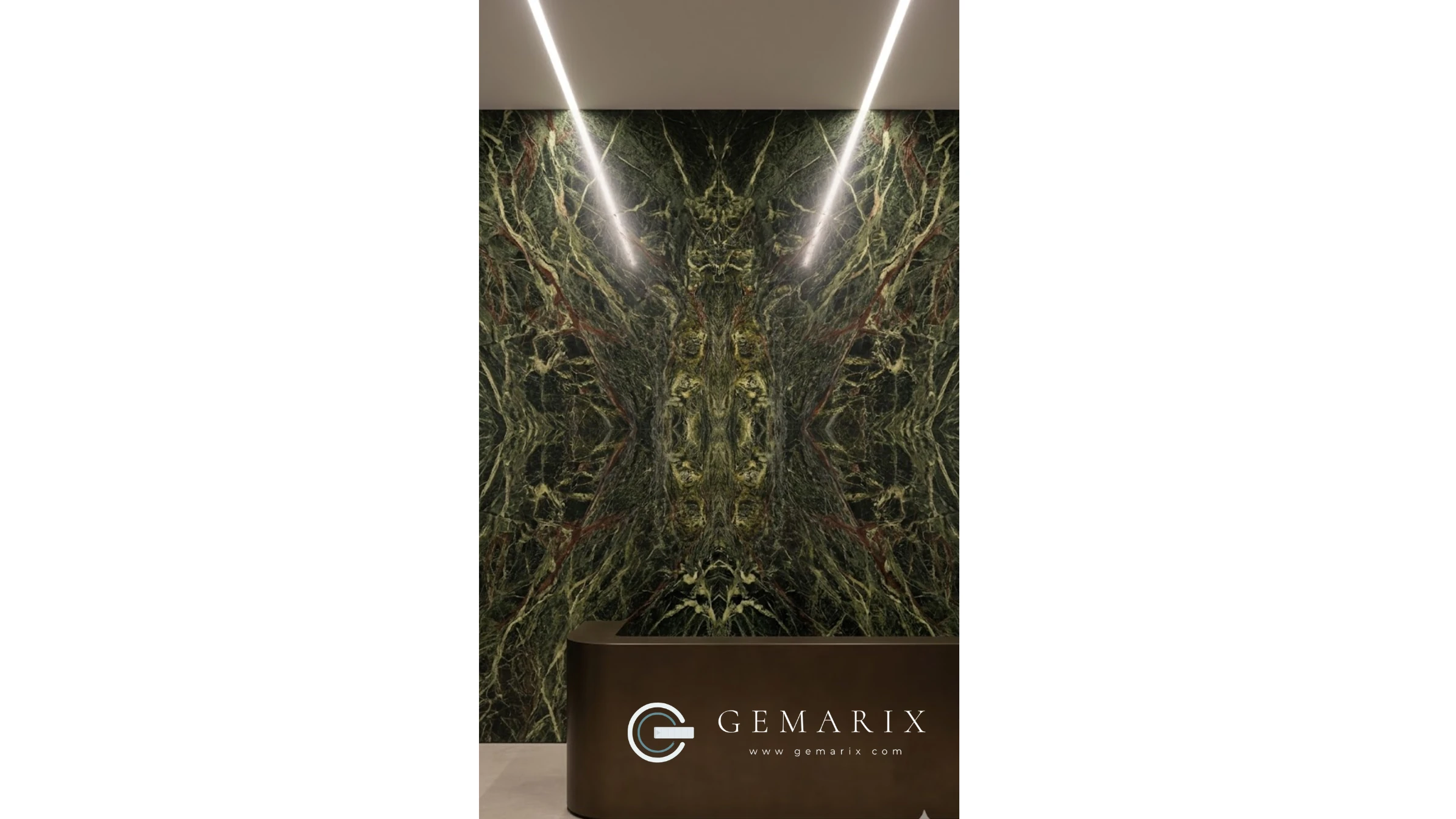
No two gangsaw slabs from the same block are identical. Book-matched pairs reveal mirror-image vein patterns that designers use for statement walls, bathroom surrounds, and architectural panel installations. The visual weight of this stone makes it most effective when used deliberately — a single feature wall, a dramatic reception desk front, or a continuous run of floor panels where the movement can unfold across the space.
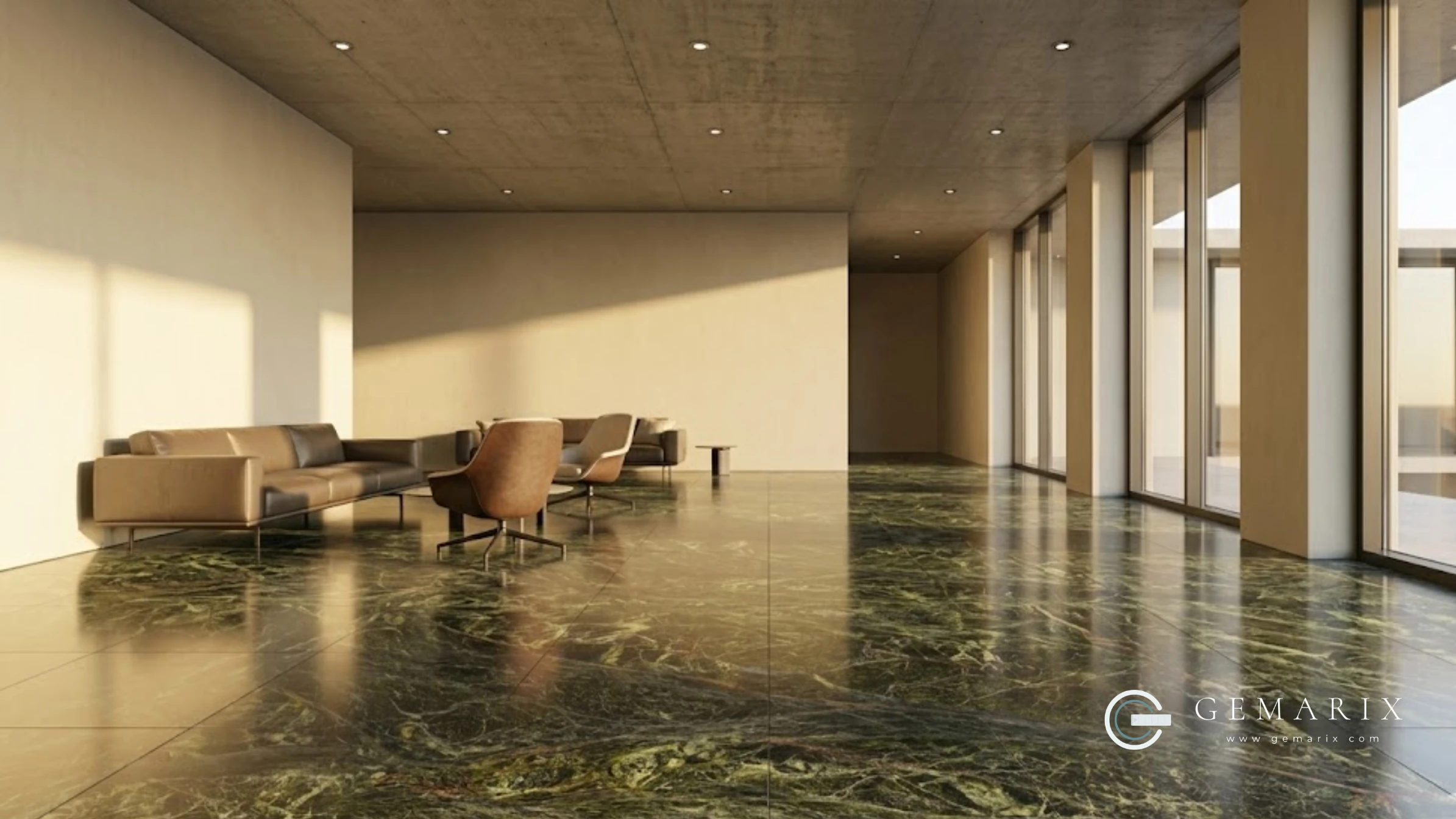
Rainforest Green Marble is specified primarily for interior applications where visual drama is the brief: hotel lobby feature walls, high-end restaurant interiors, executive suite bathroom floors and wall cladding, and retail fitout feature elements. The high-contrast veining makes it particularly effective in spaces with controlled or directional lighting, where the depth of the stone surface is amplified by shadow and reflection.
Our gangsaw slabs (280 × 180 cm) are cut for large-format wall and floor installations. Cutter slabs (180 × 60 cm) serve kitchen countertops, bathroom vanities, and linear panel applications. Custom tile cutting — 60 × 60 cm through 90 × 90 cm — is available from our Rajasthan facility to project-specific dimensions and finish specifications.
Polished finish maximises the visual depth of Rainforest Green — the dark veining becomes glossy and sharp against the reflective green ground. Honed finish produces a matte surface that softens contrast, preferred for flooring in residential settings. Leathered finish introduces subtle surface texture that reduces glare while retaining colour depth — increasingly popular for feature walls. Brushed finish is available for projects requiring an aged or tactile surface quality.

This stone is supplied in two production formats. Gangsaw slabs are large-format slabs for premium architectural projects requiring continuous surfaces. Cutter slabs are smaller-format slabs optimised for residential installations and tile production.
Custom tile sizes available: 60×60 cm, 60×90 cm, 90×90 cm. Cut to specification at our Rajasthan facility.
Seal on installation with a penetrating stone sealer and reseal annually in kitchen and high-traffic environments. Clean with a pH-neutral stone cleaner — avoid all acid-based products including vinegar, citrus, and grout cleaners, which etch the calcite surface over time. For polished floor installations in commercial settings, use felt or rubber pads under furniture legs and schedule professional re-polishing every two to three years depending on foot traffic.
Marble
Deep emerald green with gold veining. Rajsamand, Rajasthan.
View Details →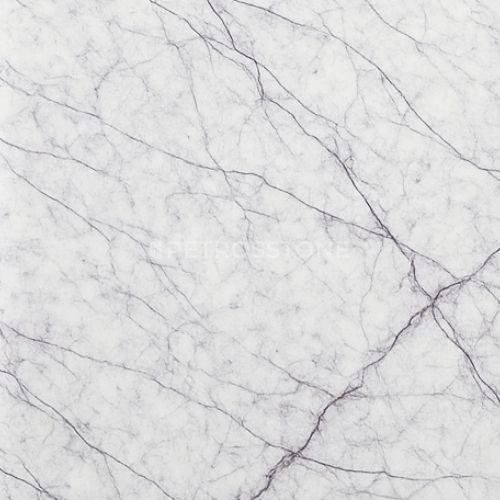 Marble
Rich violet tones. Banswara, Rajasthan.
View Details → North Indian Granite
Warm golden-beige. North India.
View Details → South Indian Granite
Pure jet black. Mirror polish.
View Details →